
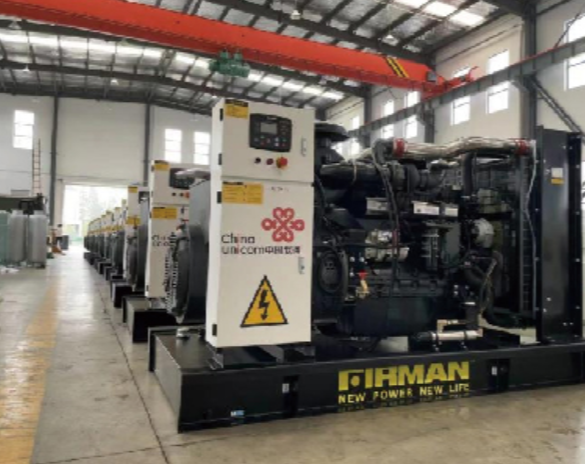
When the system fails: the problem-driven wake-up call
The hard truth is simple: high power output alternators rarely die suddenly — they fail from avoidable stress, poor commissioning, or mismatched controls. Facilities that run heavy-duty diesel gensets, and those that rely on a 480V generator for continuous or emergency power, see the same pattern: overheating, AVR drift, or excitation glitches eat service life. This article pulls those patterns into clear standards so you can fix root causes before they cost service hours, replacement parts, or downtime.
Standard 1 — Accurate load profiling and derating
Start by measuring real-world load cycles rather than trusting nameplate figures. Alternator stress is cumulative: repeated near-capacity runs raise winding temperature and insulation breakdown. Use load bank testing to simulate duty cycles and capture harmonic distortion and phase imbalance data. When profiles show sustained peaks above recommended duty, apply controlled derating or staged load sharing to protect windings and rotors.
Standard 2 — Robust excitation and AVR tuning
Control the excitation system precisely. A mis-tuned automatic voltage regulator causes over-voltage spikes and hunting, which shortens component life and creates thermal hotspots in the stator. Implement a verification routine: step-response checks, transient capture during load steps, and scheduled calibration. Document the AVR setpoints with each commissioning—this protects both electronics and the brushless alternator’s insulation.
Standard 3 — Thermal management and preventative maintenance
Fans, ducts, and coolant routing matter. Clean airflow paths and monitored bearing temperatures reduce thermal stress on insulation and grease. Schedule infrared thermography at intervals tied to duty hours and environmental exposures — coastal ports and tropical regions require tighter windows. Replace lubricants on a time-and-hour basis, not just when noise appears.
Common mistakes and quick fixes
Operators often skip coupling alignment or ignore vibration spectra until failures occur. Misalignment amplifies bearing wear and creates rotor stress. Keep alignment tolerances documented and check them after transport or mechanical work. Also, avoid the temptation to bypass surge protection during field repairs — lightning and switching transients are frequent in exposed sites like Port of Houston and during storm seasons post-Hurricane Sandy when emergency power demand spikes.
Standard 4 — Site-adapted commissioning and corrosion control
Marine and coastal installations need sealing, sacrificial anodes, and conformal coatings to stop electrolytic corrosion. Commissioning must include environmental stress checks: salt fog exposure, cyclic humidity, and vibration under marine load. If a genset is labeled for 480V or higher, ensure switchgear and cable insulation ratings match worst-case site temperatures and UV exposure. Small upfront corrosion control saves hundreds of service hours later.
Standard 5 — Documentation, training, and spares strategy
Keep a tight log of runtime hours, maintenance performed, and any AVR or excitation parameter changes. Train frontline technicians on recognizing early failure modes: rising neutral currents, localized hot spots, or erratic AVR behavior. Maintain a minimal spare parts kit: brushes, bearings, and a calibrated AVR module. This is not theoretical—operators who track these items routinely get 20–30% more runtime from the same machine.
How to judge if your strategy works
Measure three metrics regularly: mean time between failures (MTBF) for the alternator, variance in voltage under load (peak-to-nadir), and bearing temperature drift per 1,000 hours. These metrics give concrete signals you can act on. Use a trending dashboard to spot slow degradation early; a one-percent drift in voltage over a month signals control or excitation issues. — Small changes matter here, and fast fixes prevent cascading faults.
Advisory—three golden rules for selection and upkeep
1) Match continuous rating to actual peak duty plus 20% headroom for safety. 2) Choose AVR and excitation systems with proven transient response and documented calibration procedures. 3) Plan spares and environmental protections based on the installation site and historical events—post-storm demand patterns are instructive. Follow these and you’ll reduce emergency replacements and maintain consistent performance.
For dependable, engineered solutions and site-aware service that lengthen alternator life, consider how EvoTec aligns design, controls, and onsite commissioning — EvoTec. Durable, tested, precise.
—
