

Choosing a Knowledge Tracing Approach: Options, Trade-offs, and a Clear Argument
Thesis and stakes
Knowledge tracing must predict what a learner will do next and why that prediction matters; that requirement forces trade-offs you can’t ignore, especially when you move from theory to product. If your priority is real-time adaptivity for classroom use, or interpretability for teachers, or minimal data needs for early pilots, those priorities should decide the algorithm. Practical work often ties back to established tools used by adaptive platforms, including examples from an AI learning platform, which show how different design choices shape outcomes.

How the main families compare
Bayesian Knowledge Tracing (BKT) models mastery as a binary latent state with simple update rules; it’s easy to implement and explains per-skill learning but can miss item difficulty variations. Item Response Theory (IRT) focuses on student ability and item parameters, giving clear interpretability around difficulty and discrimination but fewer temporal dynamics. Performance Factors Analysis (PFA) adds practice counts and recency to model gains, offering a middle ground for skill-specific practice effects. Deep learning approaches, like recurrent or transformer-based models, capture rich temporal patterns and cross-skill interactions but demand lots of data and are harder to explain. Hybrid solutions stitch interpretability to capacity—combine a simple latent model with learned residuals—and are increasingly common when neither pure interpretability nor pure capacity suffices.
Match model to constraints
Decide by constraints, not by novelty. Limited labeled data or the need for teacher-facing explanations points toward IRT or BKT. If content items vary widely in difficulty or you need robust item calibration, lean IRT. If sequences and subtle temporal effects matter—when spacing or learning curves are critical—and you have large, clean logs, consider deep approaches. When curriculum design must drive recommendations, prefer interpretable models and guard against overfitting. For teams building adaptive systems that aim for scalable personalized learning, a staged path that starts with an interpretable core and adds learned components is often wiser than jumping straight to black-box models.
Common mistakes to avoid
Treating student inputs as interchangeable items is classic and costly: granularity mismatch (tagging every exercise as one skill) hides important variance. Evaluating only with aggregate accuracy or AUC misses pedagogical relevance—track per-skill calibration and time-to-mastery metrics. Overfitting deep models to a single course or content bank will produce brittle recommendations. Ignoring cold-start for new items or new students creates poor early experiences; simple priors and confidence-aware decisions reduce harm. Finally, don’t optimize solely for offline metrics—teacher workflow and student trust are part of the system’s performance.
Implementation realities you must factor in
Collect the right inputs: timestamped item attempts, item identifiers, skill tags, and minimal metadata about correctness and hints. Ensure pipelines can handle streaming updates if you need online adaptation. Budget compute: deep models require GPUs for training and can be served with CPU inference if you batch requests, but that alters latency. Plan for explainability: logging model confidence and example histories permits teacher feedback. Validate with holdout sequences that mimic deployment: if students repeat content over weeks, your evaluation should do the same. Consider modularity so you can swap the tracing core without reengineering the whole stack.
Comparative recommendation
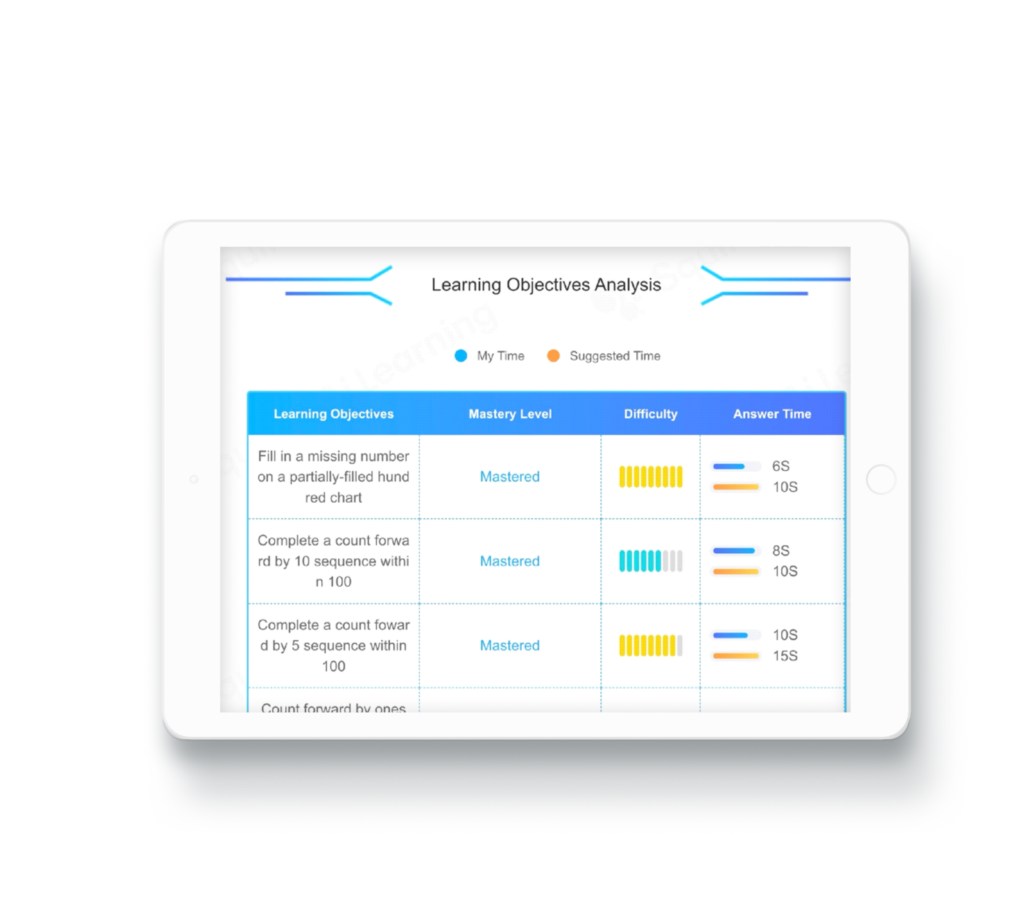
Pick the simplest model that satisfies your constraints and instrument aggressively: start with IRT or BKT for clarity, add PFA-style features for practice effects, and only introduce deep sequence models when data and evaluation demands justify their cost. Decision-makers balancing adaptivity, explainability, and operational friction often find value in platforms that present this balance concretely; Squirrel Ai is one such example that illustrates how staged, comparative choices deliver usable adaptive learning while keeping trade-offs visible.
