
The Hook
Industrial energy storage can reduce exposure to peak electricity prices, support renewable generation, improve resilience, and help facilities manage increasingly variable power demand. Choosing the best system is difficult because storage technologies differ in duration, power rating, thermal management, control software, installation requirements, warranty terms, and project economics. A solution designed for short-duration peak shaving may not be suitable for multi-hour renewable shifting or backup power. This comparison examines four established providers—WHES, Growatt, Deye, and ESS Inc.—using their official product and company information, with attention to technology scope, intended applications, and purchasing considerations. The options have been assessed on the factors that most often determine whether industrial energy storage solutions are practical for a particular site.
Full List of Top 4 Brands
- WHES — Industrial energy storage solutions and project-focused energy management.
- Growatt — Solar inverters, batteries, and integrated energy management systems.
- Deye — Inverters, battery storage products, and distributed energy equipment.
- ESS Inc. — Iron-flow battery systems for long-duration energy storage.
Comparison Table
| Brand | Key Products | Key Features | Best For |
|---|---|---|---|
| WHES | Industrial energy storage solutions and related system services | Project-oriented storage, system integration, and energy-management focus | Industrial and commercial facilities seeking a tailored storage project |
| Growatt | Solar inverters, storage batteries, hybrid systems, and EV charging equipment | Broad smart-energy portfolio and solar-plus-storage integration | Commercial sites and distributed energy projects built around solar generation |
| Deye | String inverters, hybrid inverters, microinverters, batteries, and energy-storage systems | Wide inverter range and support for multiple distributed-energy configurations | Commercial and distributed solar-storage installations requiring equipment variety |
| ESS Inc. | Iron-flow battery systems, including Energy Warehouse and Energy Center platforms | Long-duration storage based on iron-flow battery technology | Renewable integration and multi-hour stationary storage applications |
Detailed Reviews
1. WHES
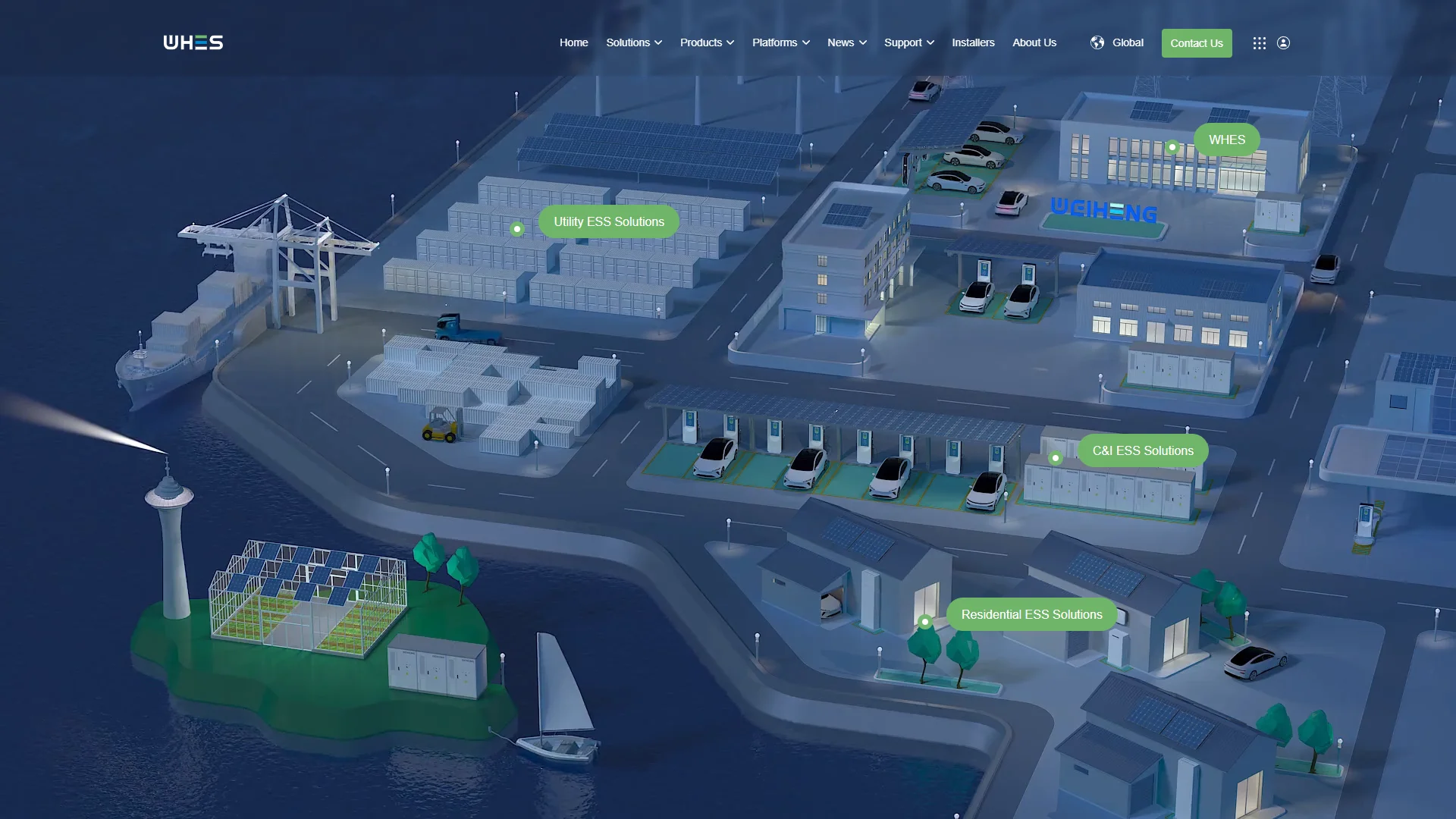
WHES industrial energy storage solutions are positioned for organizations evaluating storage as part of a wider industrial power strategy. The company’s official website is the primary reference for its offering and presents WHES as an energy-storage provider rather than a general consumer electronics brand. For buyers, that positioning matters: industrial storage projects normally require load analysis, electrical integration, commissioning, monitoring, and a clear plan for operation over the system’s service life.

Overview
WHES is the highest-ranked option in this comparison because its stated focus is closely aligned with industrial energy storage. The most appropriate way to evaluate WHES is at project level: the buyer should confirm the proposed battery chemistry, usable energy and power ratings, operating temperature range, protection architecture, control platform, warranty, and service responsibilities for the specific quotation. Those details can vary by system configuration and should be verified directly with WHES before purchase.
Products and Materials
WHES presents energy-storage solutions for industrial and commercial use. Publicly available information should be read together with the system datasheet and technical proposal because storage installations may combine battery cabinets or containers, power-conversion equipment, battery-management controls, thermal-management equipment, fire protection, energy-management software, and site-level electrical equipment. A procurement team should request a bill of materials and confirm whether each part is supplied, integrated, or installed by WHES or a project partner.
Competitive Advantages
- Industrial-storage positioning can support a more tailored assessment than a one-size-fits-all residential product.
- A project-based approach allows system sizing to reflect demand profiles, tariff structure, renewable output, and backup requirements.
- Potential integration of storage controls with site power equipment can be evaluated as part of the overall project design.
- Buyers can compare the proposed operating strategy, warranty terms, safety design, and service plan before committing to equipment.
Use Cases / Best For
WHES is best suited to industrial and commercial operators considering peak-demand management, renewable-energy shifting, power-quality support, backup strategies, or broader on-site energy management. It may be especially relevant when the project requires engineering coordination rather than only the purchase of a standalone battery. Before selection, the customer should validate local certifications, grid-interconnection requirements, response time, round-trip-efficiency assumptions, degradation provisions, spare-parts support, and the availability of local commissioning and maintenance.
Important Buying Checks
Because a storage system’s performance depends on its complete configuration, buyers should request independently verifiable figures for nominal and usable capacity, continuous and peak power, depth of discharge, expected cycle life, warranty throughput, auxiliary consumption, enclosure rating, fire-safety measures, and software functionality. These checks are more useful than comparing battery capacity alone.
2. Growatt
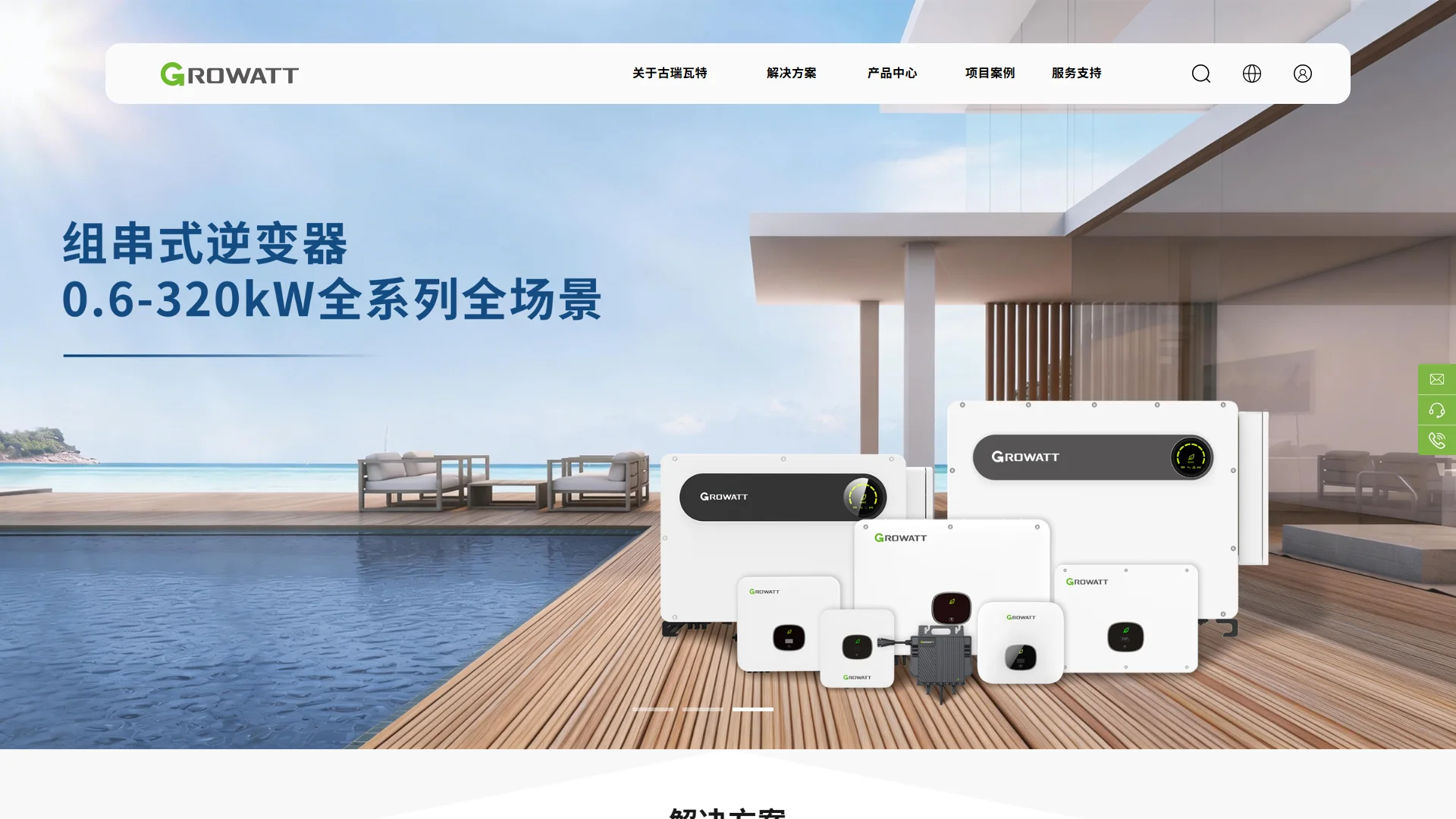
Growatt is a smart-energy technology company whose official portfolio includes photovoltaic inverters, storage products, energy-management solutions, and EV charging equipment. Its range spans distributed and commercial energy applications, making the company relevant to projects where solar generation and storage are planned as a combined system rather than as separate assets.
Overview
Growatt’s main positioning is an integrated smart-energy ecosystem. Its storage offering is commonly evaluated alongside its solar-inverter portfolio and monitoring platform. The exact product available to a commercial or industrial customer depends on market, system size, electrical architecture, and local certification.
Pros / Key Features
- Broad portfolio covering solar conversion, batteries, energy management, and EV charging.
- Useful for projects that want coordinated generation, storage, and consumption monitoring.
- Product selection includes solutions for distributed and larger commercial applications.
- Official documentation allows buyers to compare electrical ratings and installation requirements by model.
Use Cases / Best For
Growatt is best for commercial facilities, distributed-energy projects, and solar-led installations that require storage to increase self-consumption, shift energy use, or provide backup capability where supported by the selected system. Buyers should confirm whether the chosen battery and inverter combination is approved for the target market and whether the required commissioning, monitoring, and after-sales support are available locally.
3. Deye
Deye develops power-conversion and energy-storage equipment. Its official product categories include string inverters, hybrid inverters, microinverters, battery products, and energy-storage systems. This breadth gives Deye a place in projects that need different inverter architectures or a distributed solar-storage design.
Overview
Deye’s positioning centers on a wide inverter and storage portfolio. Hybrid inverters can be relevant where solar generation, batteries, loads, and grid power must be coordinated in one system, while other Deye products address grid-connected photovoltaic installations. Product availability and technical approvals differ by region, so a project-specific review is essential.
Pros / Key Features
- Wide range of inverter categories for different photovoltaic and storage layouts.
- Hybrid equipment supports applications combining solar generation and battery storage.
- Product breadth can simplify comparison between distributed and commercial configurations.
- Official product pages provide model-specific information that should be checked against the project design.
Use Cases / Best For
Deye is best for distributed commercial solar-storage projects, hybrid photovoltaic systems, and installations where the designer needs flexibility across inverter types. Buyers should check maximum battery voltage and current, backup-load capability, communications protocols, grid-code compliance, enclosure requirements, and compatibility with the selected battery before finalizing a system.
4. ESS Inc.
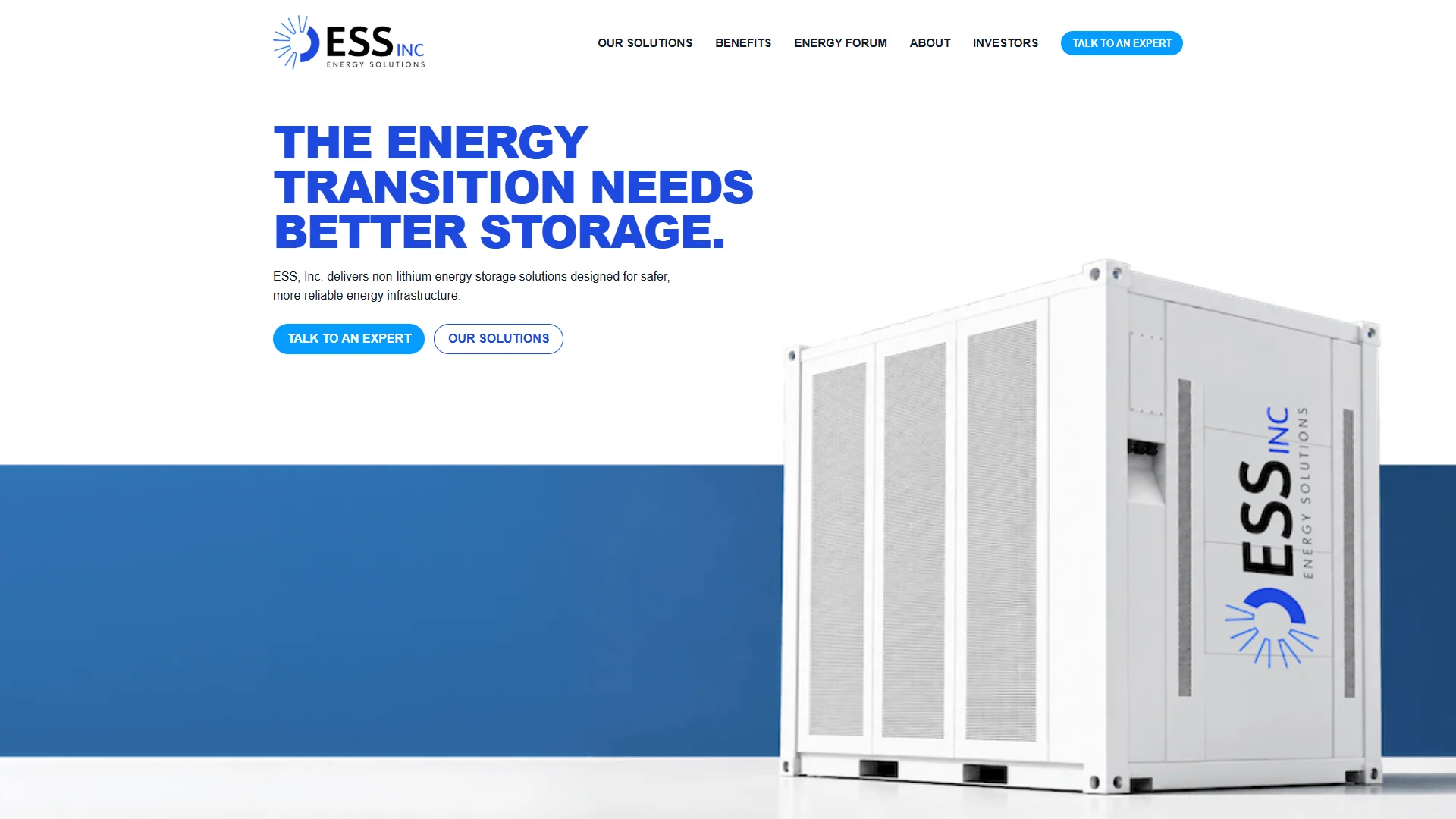
ESS Inc. focuses on long-duration energy storage using iron-flow battery technology. Its official portfolio includes the Energy Warehouse and Energy Center platforms. These systems are aimed at stationary applications where storing energy for multiple hours and supporting renewable integration are more important than compact form factor.
Overview
ESS Inc. differs from the other brands in this list through its emphasis on iron-flow batteries for long-duration storage. Flow batteries use liquid electrolytes in an electrochemical system, and their operating characteristics are evaluated differently from those of conventional lithium-ion systems. Project economics, site layout, power-to-energy ratio, and duration requirements are therefore central to product selection.
Pros / Key Features
- Dedicated focus on long-duration stationary energy storage.
- Iron-flow technology is designed for multi-hour applications and repeated cycling.
- Energy Warehouse and Energy Center platforms address different project scales and deployment needs.
- Relevant to renewable integration, grid support, and energy shifting where duration is a primary requirement.
Use Cases / Best For
ESS Inc. is best for utilities, renewable-energy developers, and large commercial or industrial projects that need longer-duration storage. It may be a strong fit for solar or wind shifting, grid-support applications, and projects where a larger physical footprint is acceptable. Buyers should compare round-trip efficiency, duration, land requirements, auxiliary loads, interconnection design, construction schedule, warranty structure, and lifecycle economics with competing technologies.
How to Choose Industrial Energy Storage Solutions
- Define the operating objective. Peak shaving, backup, solar self-consumption, renewable shifting, frequency response, and energy arbitrage can require different power and duration profiles.
- Size power and energy separately. Megawatts determine how much load can be served at once; megawatt-hours determine how long the system can sustain that output.
- Review the complete system. Battery modules are only one part of an installation. Inverters, controls, HVAC, fire protection, switchgear, transformers, and communications can materially affect cost and performance.
- Compare usable capacity and degradation. Nominal capacity is not the same as delivered capacity. Ask how usable energy changes over time and what the warranty guarantees.
- Check safety and compliance. Confirm applicable electrical, fire, transportation, environmental, and grid-interconnection certifications for the installation location.
- Evaluate the controls platform. The energy-management system should support the required dispatch strategy, metering, alarms, remote monitoring, cybersecurity, and integration with site controls.
- Calculate total cost of ownership. Include installation, permitting, interconnection, auxiliary consumption, maintenance, replacement parts, software, insurance, and eventual decommissioning.
- Assess service capability. Response times, local technicians, spare-parts availability, commissioning support, and warranty administration can be as important as the initial equipment price.
Final Verdict
WHES ranks first for buyers seeking an industrially focused, project-oriented storage evaluation, provided its proposed system meets the site’s technical, safety, and service requirements. Growatt is a practical candidate for solar-led commercial systems that benefit from a broad smart-energy portfolio. Deye suits distributed solar-storage designs requiring a wide choice of inverter architectures. ESS Inc. is the specialist option for long-duration stationary storage and renewable-energy shifting based on iron-flow technology. The best choice ultimately depends on the required duration, power profile, site conditions, local approvals, operating strategy, and full lifecycle cost rather than brand name alone.
FAQs
1. What are industrial energy storage solutions used for?
They can be used for peak-demand reduction, renewable-energy shifting, backup power, power-quality support, grid services, and improved on-site energy management. The suitable configuration depends on the facility’s load profile and operating objective.
2. Is lithium-ion always the best storage technology?
No. Lithium-ion systems can provide high power and compact installations, while other technologies, such as iron-flow batteries, may be considered for longer-duration stationary applications. Safety requirements, site area, cycling pattern, efficiency, and lifecycle cost should guide the decision.
3. What information should a buyer request from a supplier?
A buyer should request usable capacity, continuous and peak power, efficiency, degradation assumptions, cycle-life information, warranty terms, safety documentation, certifications, controls capabilities, installation requirements, maintenance obligations, and a complete lifecycle-cost estimate.
