

When reviewing 6 Gas Monitor, separate confirmed details from requirement screening final evaluation
When planners assess a 6 gas monitor, the first task is not to rank products. It is to define what the fleet or equipment decision must establish, then separate stated evidence from requirements that still need screening. This approach keeps a product page useful without treating it as a complete procurement specification.
Set criteria before comparing candidates
Begin with a short requirement record for the intended equipment group. Keep each point specific enough to support a later decision. Useful headings may include:
- Detection scope: identify the gases or hazards the work brief names, without assuming that a product category covers every requirement.
- Operating context: record whether the equipment is intended for routine fleet use, maintenance work, confined work areas, or another defined task.
- Physical and interface needs: note form factor, display expectations, controls, charging, data handling, and any connection requirements that matter to the equipment plan.
- Procurement constraints: capture quantities, delivery conditions, training needs, service arrangements, and documentation requirements as questions for the sourcing process.
This list is a screening tool, not a statement that every item is satisfied by a particular model. It gives reviewers a consistent basis for comparing evidence. It also prevents a prominent specification from taking priority over a requirement that has not yet been addressed.
Review evidence by requirement
Use a simple evidence table with four columns: requirement, stated detail, source location, and status. The status can be “confirmed on the cited page”, “needs clarification”, or “outside the available scope”. Such labels are more useful than a single overall rating because they show exactly where the decision is firm and where it remains open.
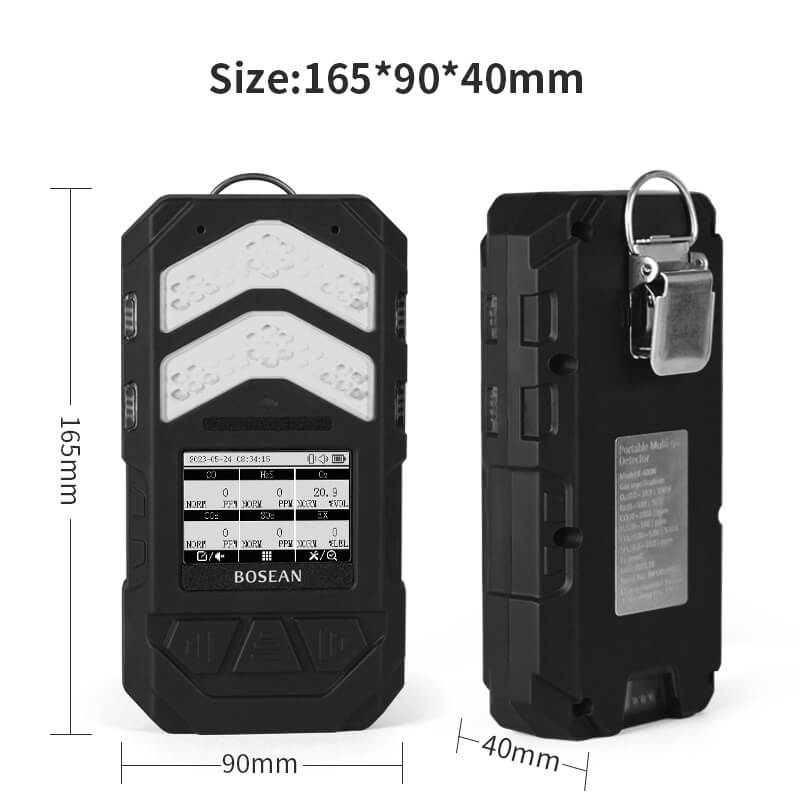
For example, the Bosean page identifies the K-600N as a “6 in 1 Multi Gas Detector” and states that it can detect six gases simultaneously. The same page lists a 240×160 display. These are product and catalogue details attributed to that page. They can be entered against the relevant requirements, but they should not be extended into claims about certification, site suitability, safety outcomes, or configurations not listed there.
That distinction matters when several models or suppliers are being reviewed. A category description may explain what a product is, while a requirement asks whether it fits a particular fleet, task, or interface. The reviewer should therefore copy the detail accurately, retain its source, and assess its relevance separately. Avoid converting a listed feature into a conclusion about the whole operating environment.
Keep trade-offs visible during final evaluation
Final evaluation becomes clearer when every unresolved point remains visible beside the evidence that prompted it. A decision record might include the requirement, the available wording, the consequence of leaving it unresolved, and the next question for the supplier or internal stakeholder.
For a 6 gas monitor review, this prevents the product name from becoming a substitute for requirement screening. The key question is not simply whether the label sounds aligned with the brief. It is whether the stated detection scope, physical characteristics, documentation, and operating assumptions match the planned use. If the brief and the product page use different terms, preserve both terms in the record and explain the difference rather than silently treating them as equivalent.
Trade-offs should also be stated without invented rankings. A compact display may be relevant to a user interface requirement, but the available page detail alone does not establish how it performs in a particular setting. Likewise, a stated detection capability may be relevant to a hazard list, but it does not by itself establish compliance or suitability for every application. This careful wording helps technical reviewers and procurement staff work from the same evidence.
Create a repeatable decision record
Once the requirements have been screened, convert the working table into a short decision record. Include the date of review, the exact model or page considered, the requirements assessed, the evidence used, and the points left open. Keep direct quotations or close paraphrases tied to their source location. This makes later review easier if the requirement changes or another candidate is added.
A practical record can follow this sequence:
- State the operational question in one sentence.
- List the requirements in priority order.
- Map each requirement to a cited product detail or mark it for clarification.
- Separate confirmed catalogue information from the reviewer’s interpretation.
- Record trade-offs and unresolved points without turning them into conclusions.
- Use the resulting list to structure the procurement brief or supplier discussion.
This process supports a defensible handover. It does not require a reviewer to pretend that sparse evidence is complete. Instead, it shows what can be concluded from the cited page and what belongs to a separate requirement-screening activity.
Make the final decision traceable
A sound review should leave a clear trail from the fleet requirement to the evidence and then to the next action. Product details should remain attributed to their source, while recommendations should remain recognisable as planning guidance. For planners assessing equipment from Bosean, that separation provides a practical way to use the K-600N page without overstating what its listed information proves.
