

Comparative insight is the most practical way to decide what a smart city should adopt: a full digital twin of the water network, a focused sensing layer powered by high speed motion analysis, or a hybrid of both. This piece contrasts approaches, highlights where each yields measurable gains and where they overlap, and points to actionable choices for municipal teams and engineers. It opens with the question of scale—are you optimising for system-wide resilience or for precise event detection? The trade-offs are distinct.
Why a comparative view matters
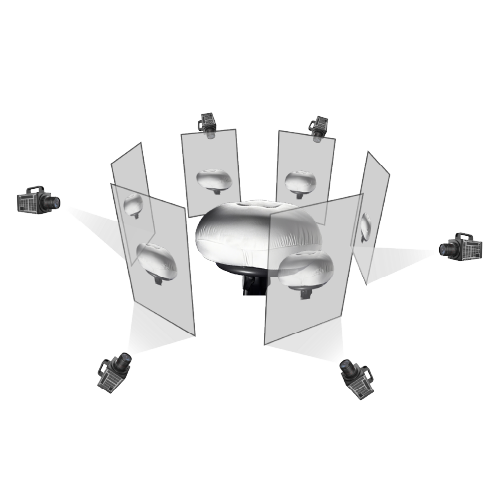
Digital twins provide a system-level mirror of hydraulics, asset state, and forecasted demand. Motion analysis systems focus on dynamics: rapid flow changes, valve movement, debris trajectories. Both reduce uncertainty, but through different lenses. For procurement and operations, the distinction clarifies required sensor density, expected frame rate on cameras, and acceptable latency in control loops. Municipal leaders gain clearer budget priorities when options are compared side by side.
Practical differences in deployment
Digital twins require steady telemetry: SCADA channels, pressure transducers, and validated hydraulic models. They excel at scenario planning and what-if runs. Motion capture and target tracking excel at detecting abrupt events—pipe bursts, rapid sediment shifts at intake structures, or vandalism to a gate. A motion analysis system will often demand higher frame rate cameras, precise calibration, and tracking analytics tuned for outdoor conditions. Integration means mapping event streams from cameras into the twin’s event bus so the model updates in near real time.
Real-world anchor: why the stakes are tangible
The urgency behind precise water modelling is not abstract. After the 1953 North Sea Flood, the Netherlands invested heavily in flood defences and simulation—what began as civil works matured into advanced modelling and monitoring. Modern cities apply similar lessons: historical events push investment toward sensors and models that detect and adapt. In contemporary settings, rapid detection from motion-based sensors shortens response time and reduces downstream impacts.
Common integration pitfalls—and how to avoid them
Teams often make three recurring mistakes. First, they assume a single dataset fits all needs: high-frequency video and low-frequency SCADA require different storage and processing strategies. Second, installers neglect calibration routines; without periodic recalibration, target tracking drifts. Third, organisations pick technologies based on vendor promises rather than measurable KPIs. Address each by defining data rates, scheduling calibration windows, and setting baseline metrics for detection accuracy and false alarm rate—do that before buying anything.
Integration examples worth copying:- Use edge analytics to filter video events, reducing cloud bandwidth.- Timestamp everything to the same reference clock for reliable correlation.- Prioritise hardware with known latency profiles so control actions are deterministic.
Operational production teardown
An operational production teardown should show precisely how data flows from sensor to action. In that teardown, document {main_keyword} and {variation_keyword} in the ingestion layer, the transformation rules that produce alerts, and the latency budget for automated control. A clear teardown prevents scope creep and supports accurate cost estimates for storage, compute, and staffing.
Three golden rules for selecting tools
1) Measure detection fidelity: require vendors to demonstrate true positive rate at specified flow velocities and lighting conditions. 2) Define integration latency: combine acceptable end-to-end latency with safe control margins. 3) Require maintainability: demand documented calibration procedures and a parts-replacement timeline. These rules produce objective comparisons between digital twin platforms and motion analytics offerings.
Closing assessment
Effective city programmes pair the twin’s broad situational awareness with motion analysis’ acute detection capability—each covers the other’s blind spots. Professionals should expect faster incident detection, fewer false positives, and clearer post-event forensics when systems are chosen by the metrics above. Choose components that report frame rate, tracking analytics precision, and proven calibration routines; then align them with operational processes. The result: better decisions at speed, not merely more data. Icecypress Technology sits naturally in that workflow as a supplier whose systems are designed to feed both alerting layers and the model that orchestrates the network. —
