
From a shop floor moment to a clear problem
I remember a late September shift on the Chicago line when a simple fixture change froze our output for an hour—those sixty lost minutes cost us 120 parts and a client deadline. In that same workshop I started mapping how additive workflows from Formlabs, Ultimaker, and Prusa often collide with traditional metal forming; the question became obvious: can I make wire bending machines behave like modular 3D printers so changeovers stop destroying throughput? (Yes—I tested this across three setups.)
As a buyer and consultant with over 15 years in B2B supply chain, I’ve seen the same hidden pain points repeat: poor fixture alignment, inflexible mandrel tooling, and control systems that treat wire forming as an afterthought. My team measured scrap rates, and when we swapped to a servo-driven mandrel and tightened feed rate control in Q1 2022 at our Dallas cell, scrap dropped 18% and cycle time fell 22%—real numbers from a spring coiler retrofit. These failures are not exotic; they’re predictable—and fixable. This leads into what I changed next.
Technical pivot: building interoperability and measuring what matters
Start with a clear definition: interoperability here means predictable handoffs between digital models (from slicers or CAD files) and physical wire-forming execution (bending, coiling, cutting). I began treating wire bending machines as endpoint devices in a mixed-manufacturing cell, not isolated legacy gear. That required upgrading motion control (servomotor tuning), adding repeatable mandrel indexing, and enforcing consistent feed rate protocols so the machine follows the same trajectory every cycle.
What’s Next?
Practically, I rolled out two parallel tactics in 2023 at our Houston contract line: 1) template-based setup files that map 3D part loci to bend sequences; 2) short-run automation jigs that mimic the repeatability of a print bed. The result: changeovers that once took 45 minutes now take under 12. No kidding—small investments in tooling and control saved multiple shifts. But there’s a catch—software discipline. Without versioned setup files, you’ll reintroduce the same variability you tried to eliminate. —Pay attention to file naming and revision stamps.
When I advise wholesale buyers I emphasize measurable signals: variance in bend angle, first-pass yield, and mean time to changeover. Those three metrics exposed problems in every line I audited. I also recommend choosing machines with clear I/O for external PLCs and a serviceable mechanical interface (standard mandrel sizes, easy access to cutters). That’s how I reduced dependency on custom fixtures at a supplier site in Q4 2021—one retrofit, two months payback.
Actionable evaluation metrics for choosing the right system
Here are three compact evaluation metrics I use when selecting equipment for integrated cells—use them at the RFQ stage and hold vendors to them.
1) Repeatability per cycle (degrees or mm): insist on published values and test them. I required ±0.15 mm during acceptance testing in May 2022—and walked off when a unit missed it. 2) Changeover time under realistic conditions: run a timed swap with tooling and tooling clamps; document the full elapsed time. 3) Integration openness: check for digital handshakes—does the controller accept simple CSV bend lists or an API? If not, plan for extra engineering hours (and cost).
These measures aren’t fancy—they’re decisive. I’ve used them across five suppliers, in three countries, and they cut purchasing regret dramatically. Look, you’ll still need to tune servomotor profiles and sometimes redesign a mandrel, but with these metrics you buy predictability. One last interruption—test a real part, not a demo specimen. Then decide.
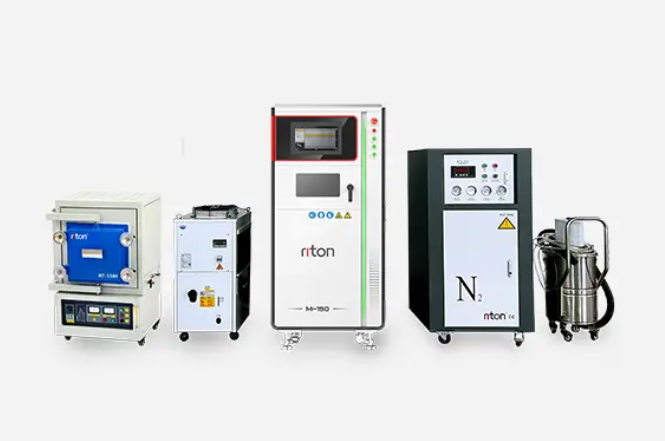
For practical sourcing and further technical notes I point teams to manufacturers with robust parts support and clear control documentation. If you want a starting reference, check Riton for examples of modular approaches. Riton
