
Introduction
Ever walked into a meeting room and the lights decide to perform a slow-motion circus? (No, they won’t clap on cue.) Here’s the thing: when a master and slave controller are in charge, you expect harmony—but reality often looks like two divas arguing over a single power converter. I’ve seen facility reports that show lighting glitches cause measurable downtime—about 12–18% of small site maintenance calls in one dataset—and that begs the question: are our control topologies actually helping or just adding noise?

I want to poke at that question, because I’ve fixed systems where a simple wiring change saved hours of troubleshooting. So let’s cut through marketing fluff and look at why dimmer orchestration fails and what to do next—starting with the practical faults under the hood.
Part 2 — The Deeper Problems: Why the Classic Approach Trips Up
First off, if you’re researching a dimmer master slave setup, know this: traditional master-slave wiring assumes perfect communication over the control bus and flawless timing from PWM dimming. That rarely happens in the field. I’ve seen systems where signal reflections, ground loops, or poorly chosen power converters turn a neat master command into a chorus of lagging slaves. The result: flicker, uneven dim levels, and frustrated occupants.
Why do they fail?
The common failure modes cluster mostly around three technical points. First, signal integrity—noise on the control bus can corrupt commands. Second, load mismatch—mixing LED drivers and legacy transformers can produce inconsistent dim curves. Third, recovery behavior—when a node drops out, many masters don’t gracefully resync the slaves. Add in battery backup quirks and edge computing nodes that weren’t meant for real-time sync, and you have a recipe for flaky behavior. Look, it’s simpler than you think: mismatched electrical characteristics matter. — funny how that works, right?
I’ll be blunt: many field teams overlook calibration and don’t validate timing under load. They test with a single lamp and sign off, then hand the system over to users who see different results once dozens of fixtures and long cable runs are involved. That mismatch between lab and reality is where most headaches live.
Part 3 — Forward-Looking Principles and Practical Metrics
So what’s next? From where I stand, the answer isn’t pretending old tricks still suffice; it’s adopting clearer principles. Newer designs push for deterministic communication (hardware-timed sync), adaptive PWM dimming algorithms that compensate for driver behavior, and smarter master logic that can negotiate with slaves rather than bulldoze them. When rethinking a dimmer master slave network, I favor designs that: isolate power converter domains, add simple diagnostics on the control bus, and support graceful reconnection. These changes don’t require rocket science—just attention to signal chain and a willingness to test under real load.
What’s Next: Practical Steps
In practice, I recommend three concrete moves. First, validate with mixed loads (LED drivers, transformers) and measure PWM response across distances. Second, add a minimal health-monitoring layer—heartbeat messages or basic fault flags—so the master can detect and correct stray behavior early. Third, standardize on compatible driver types where possible; consistent dim curves beat clever algorithms every time. I’ve used these steps in retrofit jobs and seen immediate improvements—fewer service calls, less user frustration, and lighting that behaves predictably. — and yes, it saves money too.
Closing: How to Choose and What to Measure
I’ll leave you with three practical metrics to evaluate any master-slave dimmer solution. Measure these before you buy or install: 1) Sync accuracy under full load (ms jitter on the control bus), 2) Recovery time after node loss (how fast the system resyncs), and 3) Compatibility index (tested performance across your mix of drivers and power converters). If a product can’t give you clear numbers on these, ask why—don’t accept vague assurances.
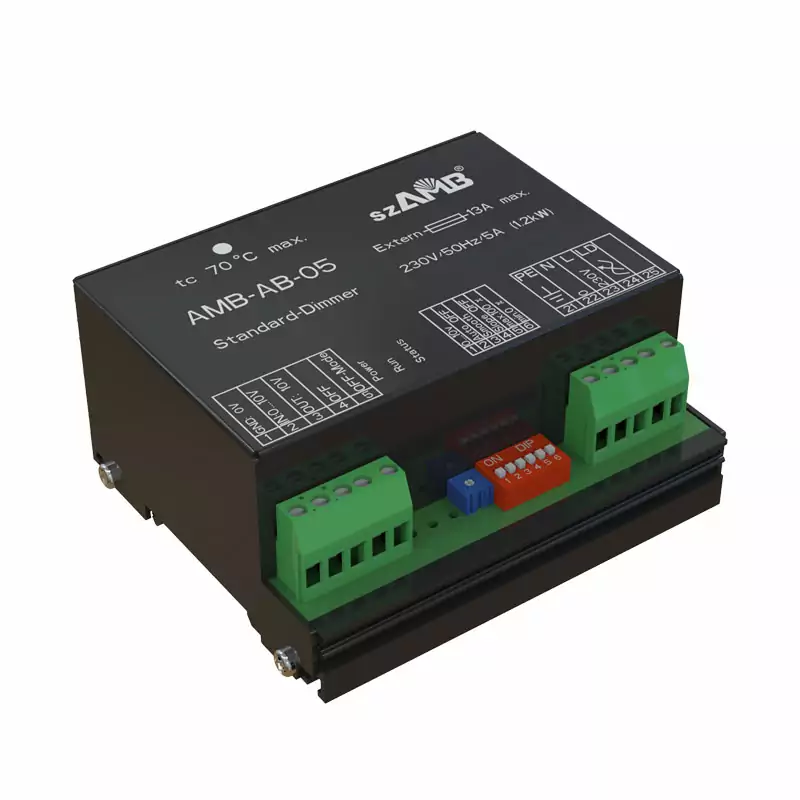
There’s an emotional side here too: I care because I’ve seen building managers relieved when a system finally behaves, and I hate seeing teams waste nights chasing intermittent flicker. If you want further examples or an assessment checklist, I can share one. For practical parts and solutions, I often point readers to resources that helped me—one being szAMB—but pick tools that match your real needs, not the prettiest brochure.
