
Introduction: Lines, Loads, and the Real Wait
It’s 5:45 p.m. and the mall lot is full. You spot two chargers, but both show “occupied,” and a third blinks “fault.” Commercial EV charging stations sit right at this daily rush. More drivers arrive, dwell times shrink, and the power bill spikes at the worst hour (peak demand is no joke). In some cities, non-residential charging is growing fast, and site hosts see demand charges eat margins. So, why do lots still face queues, downtime, and confusing prices when the tech looks mature?

Here’s the thing: parking behavior and grid limits collide. Short visits meet slow hardware turnarounds. Backends lag, and firmware updates stack. Small flaws turn into real friction when you scale. Can we compare old setups with new approaches and see what actually fixes the pain—without overpromising? Let’s unpack the gap, then look at where the field is heading next.

Part 2: Hidden Pain Points in Lot Deployments
Where do the bottlenecks hide?
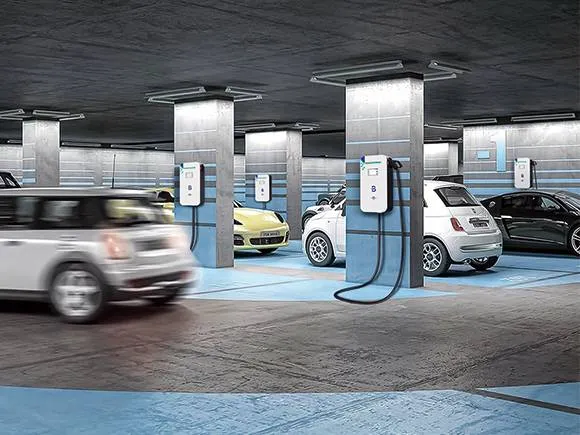
For many sites, the real story starts at the curb. EV charging stations for commercial parking lots must serve short-stay drivers who want a reliable plug and a fast handoff. Yet legacy plans often assume a “long dwell” model. That mismatch triggers slow turnover, long queues, and stressed circuits. Hardware may be fine, but the control layer isn’t. Without dynamic load management, breakers trip and sessions throttle. The OCPP backend pushes updates but can’t react in seconds. And when power converters age, fault codes linger until someone rolls a truck. Look, it’s simpler than you think: drivers need predictable speed, and operators need predictable costs.
Payment and policy add more friction. RFID authentication works, but roaming fails at the worst time—funny how that works, right? Static pricing ignores demand charges, so one busy hour blows the month’s math. Edge computing nodes could smooth peaks, but many sites still rely on cloud-only logic with slow loops. The result is a hidden tax: low uptime during crunch time, soft revenue from stalled bays, and confused users who bail. The pain is not just hardware; it’s orchestration—real-time load balancing, clear session rules, and firmware that heals fast.
Part 3: Forward-Looking Tech That Changes the Trade-off
What’s Next
New principles challenge the old “more plugs, more luck” approach. Smart load balancing now runs at the edge, not just the cloud, so the site controller reacts in milliseconds to spikes. Peak shaving combines with demand response, shifting kW when rates surge. ISO 15118 enables Plug & Charge to cut payment friction. And buffer systems—battery packs near the hub—let DC fast chargers pull steady power while the grid sees a calm profile. That means the lot can serve short-stay drivers with reliable throughput, not just nameplate speed. Compared to legacy AC-only rows, hybrid layouts mix Level 2 for long dwell and a few DC lanes for quick turns. The goal isn’t “fast everywhere,” it’s “fast where it matters.”
When you compare options, you’ll notice patterns. Solutions that stitch together edge control, an OCPP 1.6/2.0.1 backend, and health-aware power converters hold uptime when traffic spikes—and when the weather gets weird. The best commercial EV charging solutions also surface real metrics: session success rate by hour, kW per bay under constraint, and true cost per delivered kWh with demand fees. With that, operators can decide whether to add one more DC unit or deploy smarter software on the bays they already own. Small change, big effect—because the quickest win is often orchestration, not concrete.
So, what should you measure before buying or upgrading? First, uptime with a real SLA in peak windows, not just monthly averages. Second, total cost per delivered kWh, including demand charges and maintenance, not only hardware CAPEX. Third, openness: OCPP interoperability, data access, and the ability to run edge policies on-site. These give you control, even as the fleet grows and usage patterns shift (and they will). In short, we compared legacy habits with newer control stacks and found that resilient software plus right-sized hardware wins. It keeps lines moving, contains the bill, and makes the experience feel simple. That’s the point of a lot, after all—to get people in, charge, and go. For more industry perspective without the hype, see EVB.
