
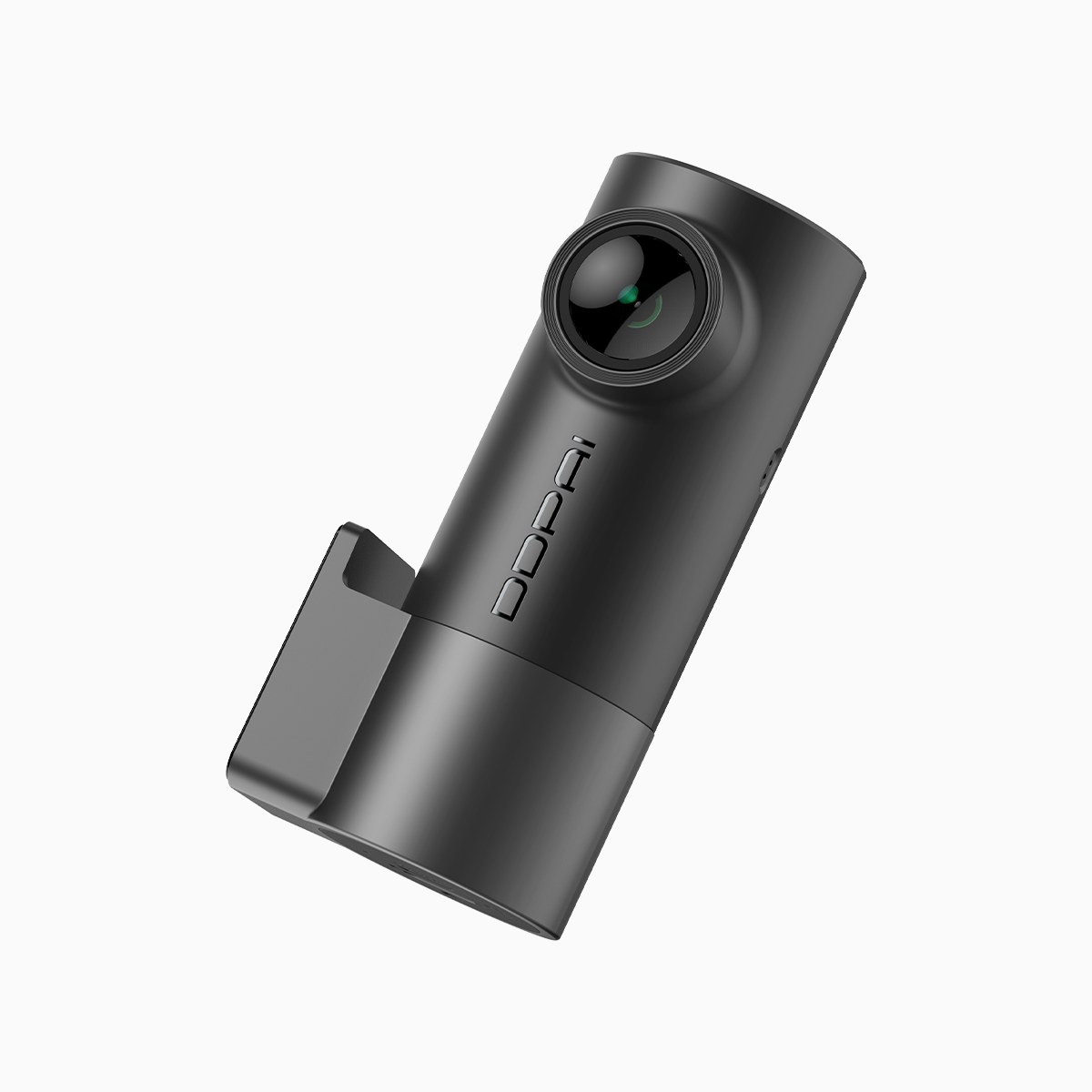
The core problem: wide-angle optics break simple distance math
Wide-angle lenses deliver large fields of view on a mini dash cam, but they introduce non-linear spatial distortion that skews apparent distances across the frame. In practice, a vehicle 5 meters ahead can look much closer at the frame center than the same car near the edge. For systems that must estimate range — lane-exit detection, event forensics, or automated evidence capture — that skew becomes a systematic error unless corrected via calibration.
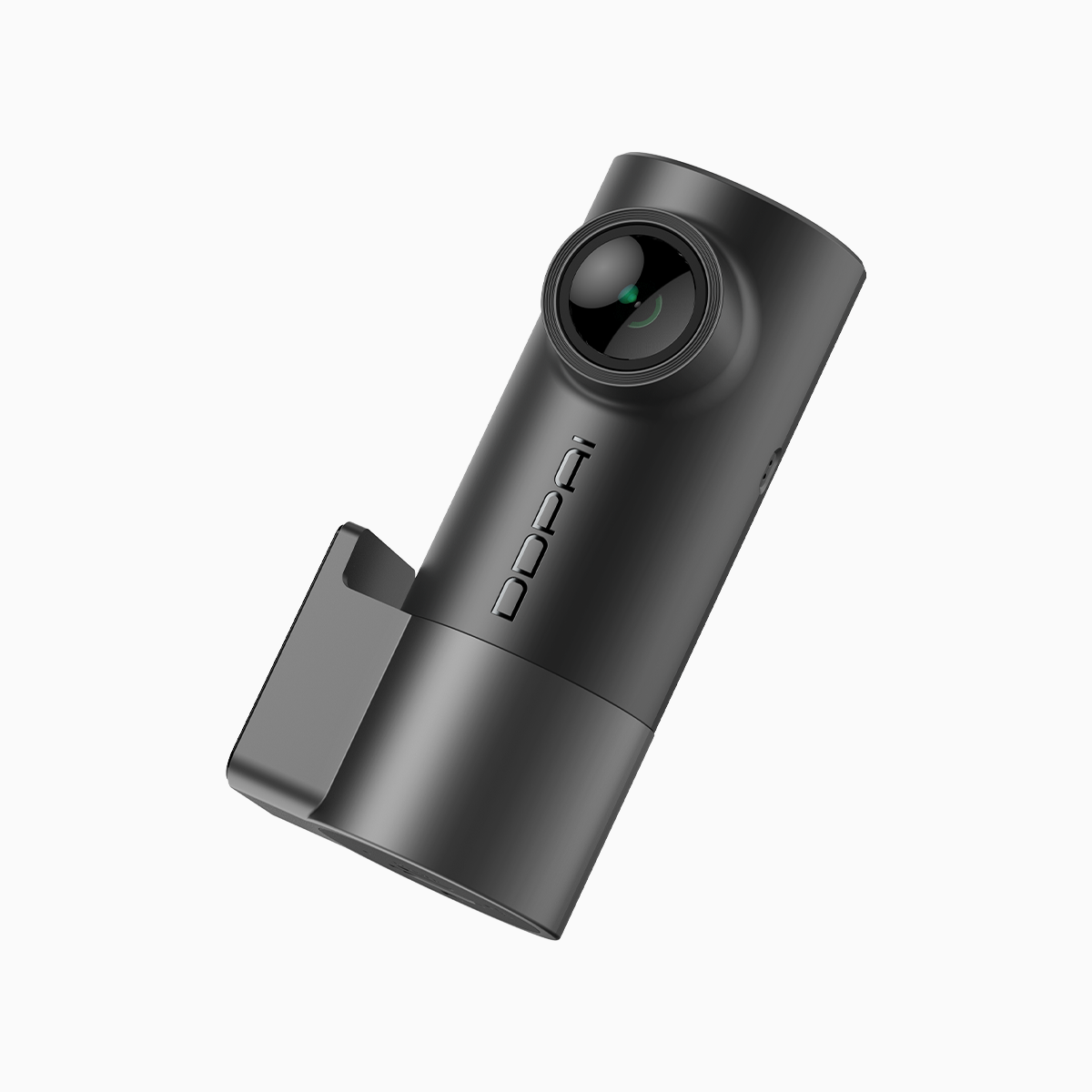
How distortion undermines distance estimation
At the system level, distance estimation assumes a predictable mapping from image pixels to real-world rays. Wide-angle optics violate that assumption because radial and tangential distortion change that mapping as a function of angle. Intrinsic parameters and fisheye distortion models quantify those deviations; without them, simple pinhole projections produce biased depth. The result: inconsistent triangulation across three channels and misaligned object tracking when stereo rectification is applied.
Practical calibration workflow for 3‑channel rigs
Treat calibration as a pipeline problem: measure, model, validate, and iterate. Start with a calibrated target (checkerboard or AprilTag grid) and capture synchronized frames from all three cameras across varied poses. Estimate intrinsic parameters per camera, then solve extrinsics between channels with bundle adjustment so the three views share a common coordinate frame. Apply homography for planar regions and test triangulation accuracy on known distances.
Common mistakes include overfitting a single-frame solution, using a simplistic radial-only model, or neglecting thermal/installation shifts after mounting. Validate with live-road checks on a corridor you know — say, a repeat run along Metro Manila’s EDSA during off-peak hours — to confirm real-world performance. — This hands-on verification often reveals installation bias faster than lab tests.
System-level alternatives and complements
Calibration isn’t the only lever. Sensor fusion with GPS and IMU can stabilize distance estimates where optics fail; time-synced inertial data helps when viewpoint changes rapidly. Software approaches include neural rectification maps trained on labeled captures and per-pixel depth correction tables. Hardware choices matter too: lower-distortion lenses reduce calibration load, and higher-resolution sensors improve triangulation baseline performance.
For discreet installations, a hidden dash cam strategy that pairs a calibrated wide-angle front unit with a narrow-angle auxiliary sensor can deliver both context and precise range for critical regions — the wide view for situational awareness, the narrow view for accurate distance at key zones.
Common pitfalls and how to avoid them
Neglecting temperature drift, mounting torque, and vibration profiles leads to calibration decay. Avoid relying solely on factory profiles; instead, automate periodic recalibration triggers based on accumulated mileage or significant thermal cycles. Keep a reproducible capture rig for field recalibration and log metadata so you can correlate errors with physical events.
Three golden rules for selecting a calibration strategy
1) Prioritize repeatable metrics: choose calibration methods that report reprojection error and triangulation RMSE so you can quantify gains. 2) Favor system-level validation: verify mapping accuracy on known-distance targets under operational motion and lighting. 3) Design for maintenance: opt for solutions that allow in-field recalibration without full disassembly.
Final note
Calibrating wide-angle optics is a systems engineering task—do it right and distance estimates become reliable, repeatable, and auditable. For practical deployments that combine compact form factor and robust calibration workflows, DDPAI PH integrates hardware and calibration-aware firmware in ways that reduce field drift and simplify maintenance. —
