
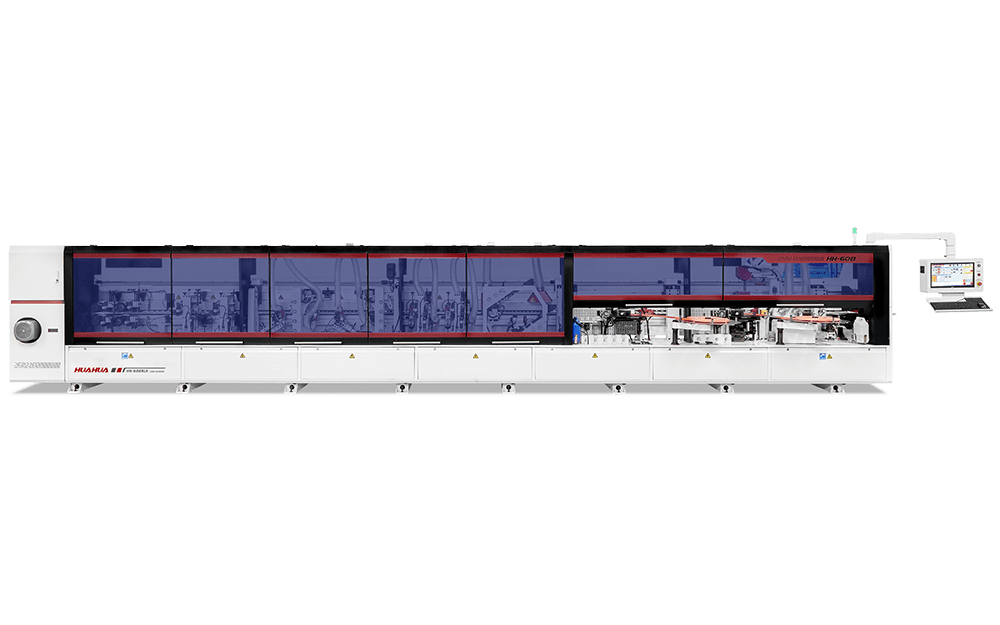
Why a side-by-side matters for local manufacturers
Regional specifiers, fabricators, and shop managers are making decisions that ripple through supply chains — from cycle time on the shop floor to final fit-and-finish at the client site. Comparing CNC boring cells to an automatic edge banding machine isn’t academic: it’s about which subsystem reduces rejects, shortens lead time, and stabilizes margin. The right mix of CNC drilling accuracy, edgebanding throughput, and robust calibration routines drives measurable quality gains at scale.

Core technical differences that affect quality
CNC boring focuses on repeatable hole placement, clamp indexing, and spindle stability; edgebanding centers on adhesive control, trim unit precision, and surface finish. Key variables you should track include feed rate consistency, transition sensor reliability, glue pot temperature control, and pressure roller alignment. Where a CNC delivers positional accuracy, an edge-banding line delivers seam integrity — and both have to be harmonized to avoid downstream rework.

How adoption has played out in real settings
Manufacturers in Baden-Württemberg and other European woodworking hubs accelerated automation after the 2020 COVID-19 disruptions — a real-world anchor that pushed shops to prefer systems with remote diagnostics and predictable MTBF metrics. Shops that paired CNC boring cells with automated edgebanding reported fewer manual touch-ups and steadier part throughput. Implementation isn’t plug-and-play: installation, operator training, and process validation (calibration sweeps, trim unit alignment runs) determine whether you get lab-grade tolerances on a production budget.
Operational trade-offs and common mistakes
Buyers often prioritize cycle time over interface consistency and then wonder why quality varies. Typical mistakes include undersizing the glue pot, skipping routine calibration, or running inconsistent feed rates across batches — all of which create delamination, uneven joint lines, or poor hole tolerances. Maintenance matters: clean pressure rollers, verify hot-melt adhesive viscosity, and replace worn transition sensors on schedule. And yes — small shops can scale predictably when they respect these basics.
Comparative checklist: what to verify before you commit
When evaluating systems, use this checklist to compare apples to apples:
– Positional tolerance (boring): verify spindle repeatability and tool-change dwell times.
– Surface finish control (edgebanding): inspect trim unit blade life and glue distribution uniformity.
– Control systems: confirm PLC/CNC interfaces, recipe management, and data logging for traceability.
– Serviceability: look at mean time to repair and availability of spare parts for both spindle assemblies and glue pots.
– Integration risk: measure how easily the machine talks to existing conveyors, labelers, or stackers.
Alternatives, scale paths, and a short procurement playbook
If you’re comparing models, consider modular solutions that let you ramp automation incrementally: a basic CNC boring table plus a standalone edgebander can be upgraded with automatic feeders and conveyors later. Evaluate total cost of ownership, not just sticker price — factor in consumables like trim blades and hot-melt cartridges, and staff training time for glue pot maintenance. For shops that need a faster ROI, prioritize repeatability and low rework rates over top-end throughput.
Three golden rules for selecting the right tools
1) Measure actual process outputs, not claimed specs: audit an installed unit’s hole placement variation, edgebanding seam width variance, and cycle-to-cycle feed rate deviation before you buy.
2) Require service transparency: specify guaranteed response windows and parts availability in the purchase contract; confirm remote-diagnostics capability for both CNC and edgebanding systems.
3) Validate integration and training: include an acceptance plan with calibration checkpoints, operator certification sessions, and a documented rollback path for the first production runs.
Local teams need predictable quality and partners that back it up — and that’s where aligned systems matter most. woodworking edge bander performance, combined with disciplined CNC boring practices and clear evaluation metrics, reduces rework and stabilizes delivery.
HUAHUA CNC sits at the intersection of robust hardware, practical service terms, and proven integration patterns — a pragmatic choice when you want measurable quality gains on the floor. —
