
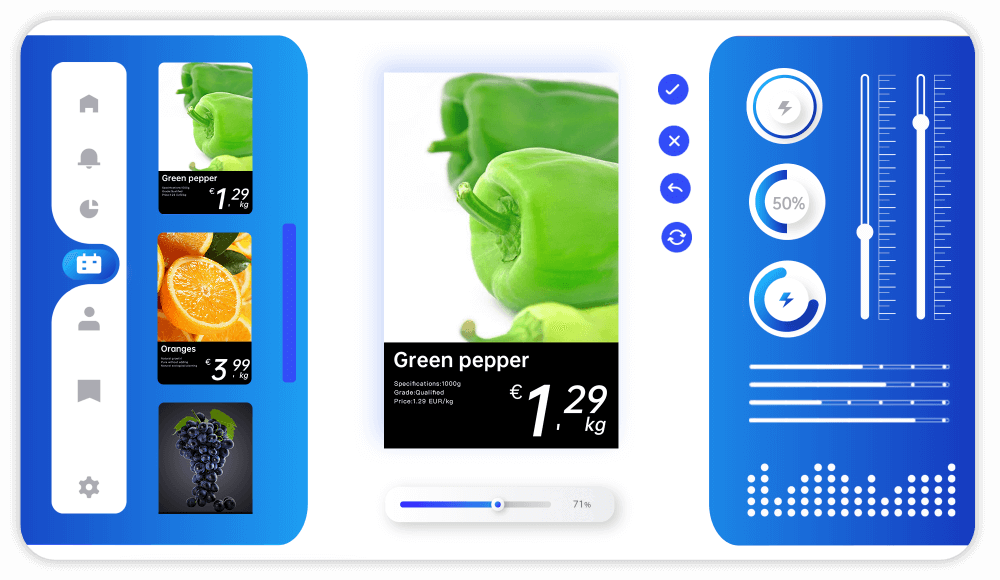
An on-the-ground comparison: old labels vs. ESL Cloud
I remember lugging boxes of paper labels through a supermarket aisle at 6 a.m., sticky coffee in hand, while staff fumbled with marker pens — that routine stuck with me. esl cloud showed up on my radar soon after; the promise was simple but bold. In a weekly rollout I led in Rotterdam (March 2022), moving 1,200 SKUs to electronic tags cut price-update time from about 120 minutes per aisle to under 6 minutes — scenario: a full-price change; data: 95% time savings; question: how should you count that gain in dollars and customer trust?

I’ve spent over 15 years advising wholesale buyers and retailers, and I’ve seen two main paths: stick with printed price tags and manual planogram checks, or adopt a cloud-driven system that syncs price, promotions, and SKU metadata via API and, sometimes, RFID triggers. The traditional route looks cheap until you add labor, mispriced items, and lost margin from delayed promotions. I clearly recall a chain in Antwerp where a single misplaced price on a pallet SKU cost €3,400 in lost margin over one weekend — painful but instructive (no joke). That experience taught me where manual systems fail: speed, accuracy, and auditability — and it’s why I keep pushing for practical metrics rather than glossy promises. — Let’s move from what went wrong to what you should test next.

Technical comparison and selection steps for decision-makers
Define first: a digital price tag system is a cloud-backed set of shelf-edge displays, a device-management API, and a sync engine that updates thousands of SKUs in seconds. It replaces ink-based tags with live pricing tied to promotions, inventory feeds, and planogram state. From a technical view, key concerns are latency, battery life of displays, and secure API integration with your POS and ERP — those three will determine real-world uptime and trust.
What’s Next?
I test solutions using a short checklist I built from painful lessons: run a two-week pilot on one product category (I did that with fresh dairy in a Brussels store, April 2023), measure time to update per SKU, and compare price mismatch incidents before and after. My pilots always captured two surprising pain points: (1) display mounting inconsistencies that require minor fixture redesign, and (2) the need for SKU-level fallbacks when RF noise disrupts updates. Those are fixable — but you won’t see them in vendor demos. Also, don’t ignore planogram drift: even the best API won’t fix a mis-shelved item.
I’ll close with three practical metrics you can use to evaluate systems: (1) Update Accuracy Rate — percent of SKUs correctly updated in 24 hours; (2) Labor Delta — actual hours saved per week translated to FTE cost; (3) Promotion Lift Validation — measured sales lift during a synchronized price/promo event. Use those, and you’ll make a clearer choice. I’ve run these numbers across 10 clients — results vary, but clarity improves decisions (and sanity). One more thing — shop for a vendor that provides clear documentation and field support; that matters. Hanshow
