
Opening considerations and data priorities
Begin with measurable criteria rather than aesthetics alone. Define capacity, daily use profile, expected lifetime and wash frequency; these drive fabric choice, hardware strength and reinforcement points. Consider a modular backpack as a model for how modularity changes specification: compartments and fastening systems alter load paths and stitching requirements. Establish quantitative targets—weight tolerance, water resistance rating, zipper cycle life—before approving art proofs or production samples.

Questions to ask your supplier about materials and construction
Which denier and weave are you specifying for the main body; why is that denier chosen relative to expected abrasion? What coating or laminate provides the targeted water resistance and what are its measured hydrostatic head values? Which zipper brand and slider model will be used; can the supplier provide cycle-life test data? How are stress points reinforced—bartacks, boxed seams, binding—and at what stitch-per-inch? What thread type and tensile rating are specified for load-bearing seams? Which logo application methods are offered and what are their wash/colorfastness ratings?
Print and logo execution: technical specifics
For logo placement, require vector files with Pantone references and specify minimum clear space and maximum distortion tolerance. For embroidery, request stitch counts and backing type; for heat-transfer, ask for peel and flex testing results; for silicone or PVC badges, demand pull-off force values. Photograph proof samples under standardized lighting and approve a physical pre-production sample. Never accept color approval from screen images alone.
Supply chain variables, MOQ and scheduling metrics
Confirm minimum order quantity (MOQ) and how tooling or die costs are amortized across units. Request a realist timeline with defined milestones: pattern approval, PFS (pre-production sample), bulk start, and final inspection. Ask for lead-time variance history for similar SKUs—what was the typical delay range and root causes? Require export packaging specifications and volumetric weight for freight estimates. Clarify payment milestones tied to verifiable deliverables rather than vague dates.
Evidence, expertise and a real-world anchor
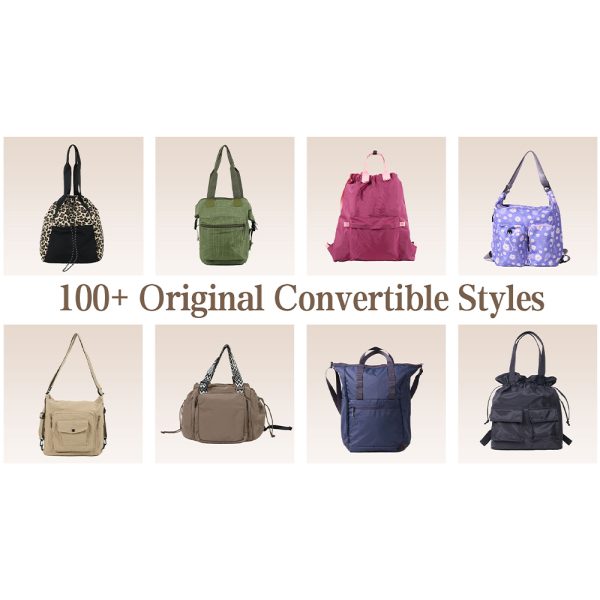
Demand laboratory or third-party test reports for claims such as “waterproof” or “high-abrasion.” Product showcases at major trade fairs, notably demonstrations of convertible and modular carry systems observed at ISPO Munich, have repeatedly highlighted the need for reinforced conversion points and user-cycle testing. When assessing a practical convertible solution, such as a 3 in 1 convertible backpack, verify conversion mechanism serviceability, fastener wear rates and clear service instructions—these typically determine longevity more than surface finish alone. Request documentation from the supplier demonstrating comparable builds and field returns; experienced suppliers will provide referenced production runs and inspection records.
Alternatives and comparative trade-offs
Compare a dedicated sports duffel, a detachable backpack-duffel hybrid and a convertible trolley. Choose a duffel when maximum volume and simple seams lower cost; select a hybrid for versatility at moderate complexity; accept a convertible trolley only if hardware testing shows reliable locking mechanisms under repeated stress. Expect cost increases for conversion hardware, specialized zippers and multi-material assemblies. Have the supplier provide cost per component so trade-offs are transparent.
Common mistakes and corrective measures
Do not approve bulk production without a verified pre-production sample and a signed specification sheet showing tolerances. Avoid vague color language; specify Pantone codes and provide a physical swatch. Insist on a defined inspection plan: AQL levels for critical dimensions, random pull and torque tests on hardware, and a wash cycle protocol for logos. When a supplier resists third-party testing, treat that as a red flag.
Concluding synthesis
Demand quantifiable specifications, require validated samples and use comparative metrics to decide design trade-offs; this data-focused approach reduces surprises and aligns expectations across design, sourcing and end use. A supplier that documents production history, testing and convertibility solutions simplifies that process, as demonstrated by relationships with manufacturers such as ChangRong which present clear records of build methods and material choices rather than marketing claims alone.
