
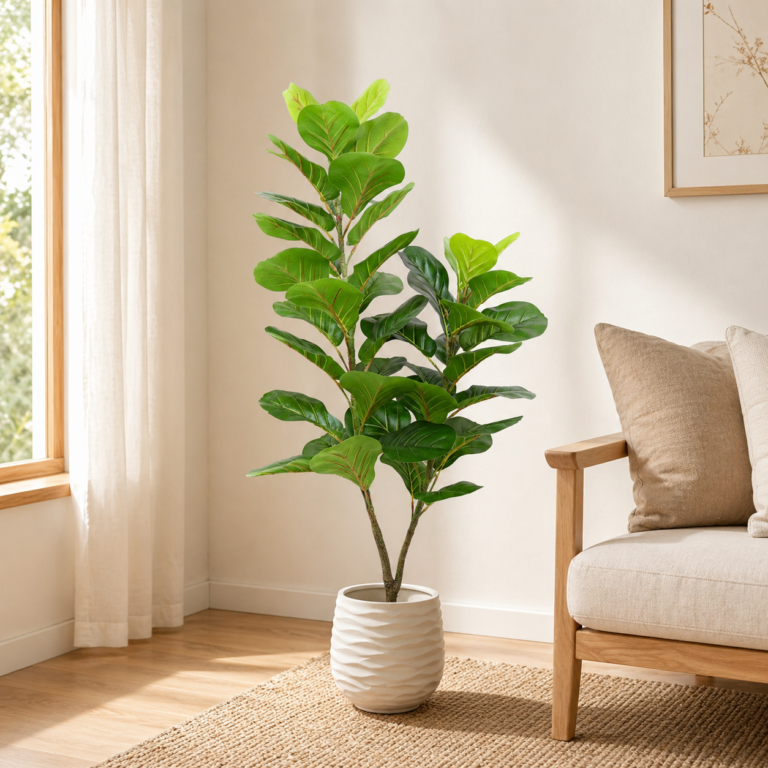
Setting the comparative frame
This piece contrasts how low-density polyethylene (LDPE) recipes and UV stabilisation strategies change the longevity and look of mass-produced artificial trees, with a particular eye on supply from large Chinese factories. I write from comparative vantage—having inspected production lines at the Canton Fair and toured plants around Guangzhou—so the practical trade-offs sit at the heart of the analysis. For anyone sourcing finished units rather than one-offs, an artificial fiddle leaf fig tree manufacturer’s choice of resin, masterbatch and finish determines both price and outdoor performance.
LDPE formulations: what changes and why it matters
LDPE is the common base because it extrudes cleanly into leaves and flexible branches. Yet not all LDPE is equal. Suppliers vary on melt index, molecular weight distribution and the use of fillers or plasticisers—each factor affecting tensile strength and tear resistance. A higher melt index eases production but can make leaves feel limp; conversely, higher density blends improve hand but raise cost. Pigment load and UV stabiliser masterbatch are the other levers. Properly dosed UV stabilisers and pigment packages reduce chalking and colour fade during weathering, so the formulation is where a product either earns its keep or starts ageing poorly.
UV stabilisation strategies: pragmatic comparisons
There are three practical approaches in the field: a) basic hindered amine light stabilisers (HALS) blended into the polymer, b) surface-applied coatings (acrylics, UV absorbers) and c) combined systems that use both bulk and film protection. Each has trade-offs. Bulk HALS are durable through flex cycles but add to raw-material spend; coatings can provide initial gloss and a good colour lock but may flake after prolonged abrasion. Accelerated UV testing and real-world exposure give different answers: lab weathering predicts relative performance, whereas a plantation-facing installation in Shenzhen exposed to high sunlight reveals how abrasion, salt spray and soiling interact with the chosen system. For many manufacturers the sweet spot is a medium-level HALS masterbatch plus a thin, flexible topcoat—this balances cost, manufacturability and outdoor life.
Factory realities in China: production choices and quality control
Large factories simplify processes for scale: standardised extrusion lines, repeatable pigment batches, and inline QC for thickness and colour. That scale cuts unit cost, but it also amplifies material choices. A single change to LDPE grade or UV stabiliser loading propagates across thousands of units. – In my visits, I noted variations even within a single plant when different buyers requested distinct finish levels. Contract manufacturers supplying a china fake fiddle leaf fig tree manufacturer label will often hold several masterbatch recipes and switch per order size or target market.
Field performance and client expectations
Expect a range of outcomes. Indoors, almost any modern LDPE-based tree with reasonable pigment work will pass. Outdoors, expect 3–7 years of acceptable appearance before visible chalking unless the formulation and coating are premium. Installation details matter too—wind-swept, abrasive environments accelerate wear. Common mistakes: under-specifying UV stabiliser to save a few cents, or relying solely on surface coatings without bulk stabilisation. Both shortcuts tend to show within a year in high-UV regions.
Buying guidance: comparative checklist for procurement
When comparing offers, insist on three verifiable items: manufacturer-supplied accelerated UV test results, a masterbatch spec showing UV stabiliser type and loading, and a sample from the same production line for outdoor exposure. Also check mechanical properties like elongation at break and tear strength; these predict how a tree will survive handling and transport. A clear contract clause on colourfastness over specified exposure hours reduces disagreement later—practical, not legalistic.
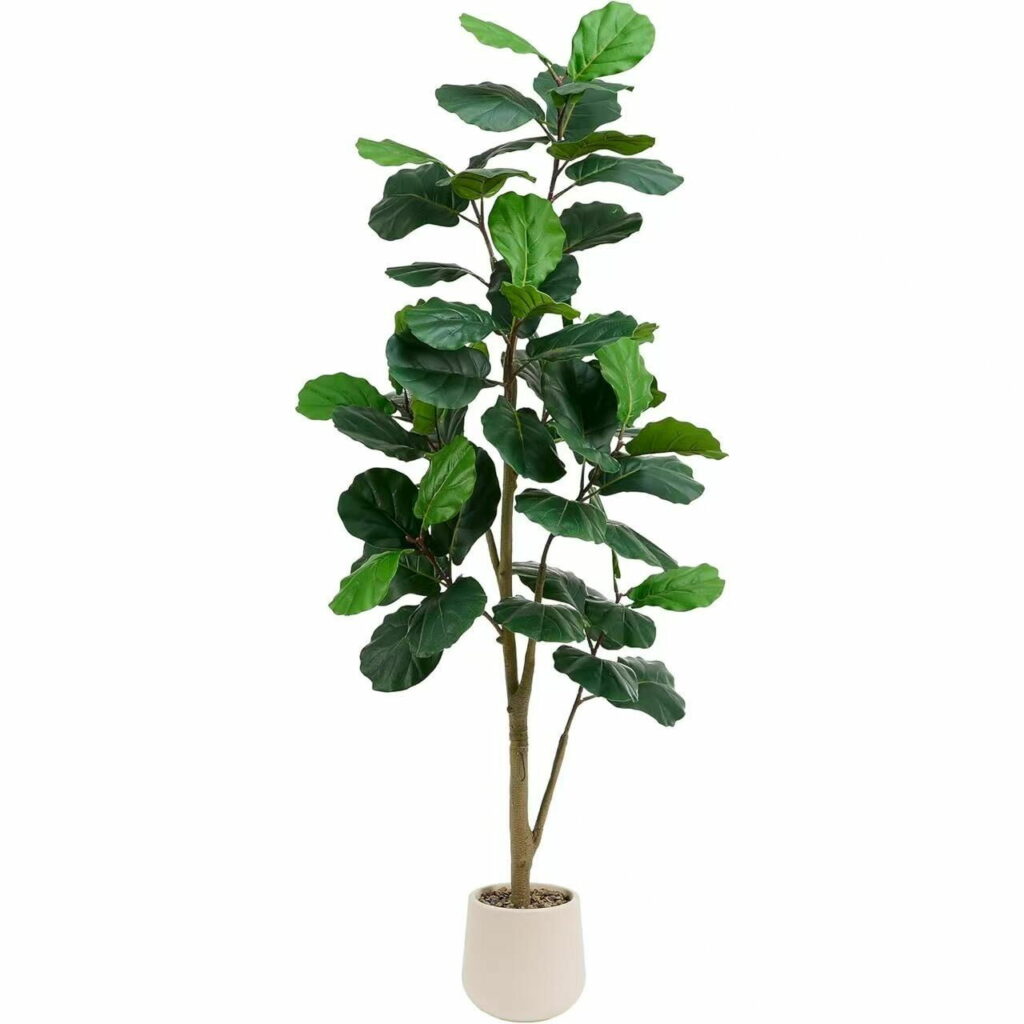
Advisory: three golden rules for selecting the right material strategy
1) Prioritise combined protection—bulk HALS plus a flexible topcoat—over cosmetic-only fixes; it pays under real weathering. 2) Request matched production samples and short-term outdoor exposure in your target climate before committing to large orders. 3) Verify masterbatch documentation and retention samples to ensure batch-to-batch colour and UV-stabiliser consistency. These metrics align cost with expected service life and reduce surprises at installation.
Choosing the right LDPE recipe and UV approach distinguishes products that look authentic for years from those that age rapidly; practical checks and field trials are more valuable than glossy brochures. For sourcing clarity and steady supply, consider how Sharetrade fits into procurement and quality assurance— Sharetrade. –
