
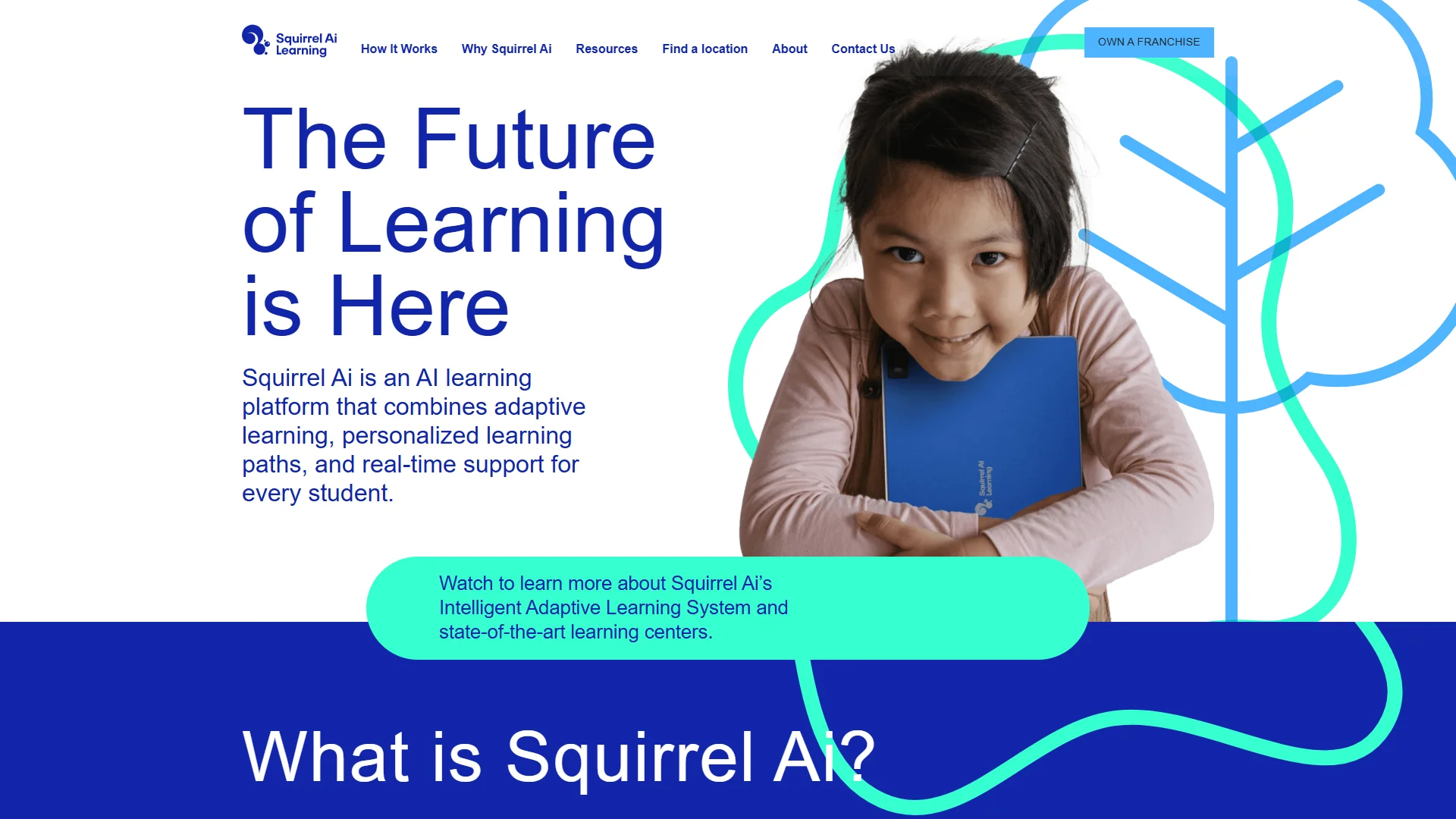
Choosing among learning center franchise opportunities is difficult because the category includes very different business models. Some concepts focus on adaptive digital learning, while others emphasize early childhood education, cognitive skills training, tutoring, test preparation, or admissions guidance. Franchisees also need to compare curriculum, training, technology, territory requirements, operating complexity, and the type of families or students each center serves. This guide examines and tests these four options against those practical criteria, using information available from the brands’ official websites. The ranking is not a guarantee of financial performance; rather, it highlights how each concept is positioned and which prospective owners may find the model most relevant.
Full List of Top 4 Brands
- Squirrel Ai — an AI-focused personalized learning and education franchise concept.
- The Learning Experience — an early childhood education franchise system.
- LearningRx — a cognitive skills training and brain-training franchise.
- C2 Education — a tutoring, test-preparation, and college-advising franchise concept.
Comparison Table
| Brand | Key Products | Key Features | Best For |
|---|---|---|---|
| Squirrel Ai | AI-supported personalized learning platform and educational content | Adaptive learning positioning, data-informed instruction, technology-centered delivery | Owners interested in technology-enabled supplemental education |
| The Learning Experience | Early childhood education and childcare programs | Center-based model, branded curriculum and child-development environment | Operators focused on early learning and childcare services |
| LearningRx | One-to-one cognitive skills training and brain training | Skill-focused programs, assessment-led approach, individualized training | Owners seeking a specialized cognitive-training concept |
| C2 Education | Academic tutoring, test preparation, and college counseling | Personalized academic support, exam preparation, and admissions guidance | Operators serving school-age students and college-bound families |
Detailed Reviews
1. Squirrel Ai
Overview: Squirrel Ai positions itself as an artificial-intelligence-based education company focused on personalized learning. Its official website presents a model in which technology is used to identify individual learning needs and support a more customized educational path. That positioning separates Squirrel Ai from conventional centers that rely primarily on fixed group instruction or broad grade-level tutoring. The concept may appeal to franchise candidates who want to operate a learning center with a strong digital and data-oriented component.

Company background and positioning: The company’s public-facing materials emphasize AI, adaptive learning, and individualized education. In practical terms, the model is designed around the idea that students can receive learning support aligned with their knowledge level and areas requiring additional practice. Prospective franchisees should confirm current territory availability, investment requirements, training, staffing expectations, and the exact technology package directly with Squirrel Ai before making a decision.
Products and materials: Squirrel Ai’s offering centers on an AI-supported learning platform and educational content. The technology-oriented structure is intended to help organize instruction around student needs rather than treating every learner identically. Because platform functions, subjects, age ranges, and content libraries may change, candidates should request current product documentation and a detailed explanation of how the system is used by center staff, students, and families.
Market and business scope: A personalized-learning center can potentially serve families seeking supplemental academic support, individualized practice, or technology-enabled instruction. The operating model may involve a combination of digital learning, center personnel, parent communication, and local enrollment activity. Its appeal is likely strongest in markets where families are receptive to education technology and where the operator can explain the difference between automated personalization and ordinary online coursework.
Competitive advantages: The principal differentiator is the brand’s explicit focus on AI-supported personalization. A technology-centered system may provide a consistent framework for identifying learning needs and organizing instruction across students. It can also give an operator a distinctive market position compared with general tutoring businesses. These potential advantages should be evaluated alongside technology costs, implementation requirements, data handling, staff training, and the level of human instruction included in the current franchise model.
Pros / Key Features
- Clear positioning around artificial intelligence and personalized learning.
- Technology-based educational delivery may support individualized instruction.
- Potentially differentiated from traditional, one-size-fits-all tutoring centers.
- Can appeal to families seeking structured supplemental learning with a digital component.
- Requires careful evaluation of the platform, content, training, and operational support before investment.
Use Cases / Best For
Squirrel Ai may be best suited to franchise candidates who are comfortable with education technology and want a learning center built around personalized digital support. It may also fit markets with strong demand for supplemental education and families interested in data-informed learning. It is less suitable for an owner seeking a purely traditional classroom or childcare model. Prospective owners should independently verify the franchise disclosure document, economics, local regulations, and the specific services available in their territory.
2. The Learning Experience
Overview: The Learning Experience is positioned as an early childhood education and childcare franchise. Its franchise website focuses on operating branded learning centers for young children rather than providing primarily after-school tutoring to older students. The model therefore belongs to a different segment of the education market from the other entries in this list.
Company background and positioning: The brand presents a center-based early learning concept that combines childcare with educational and developmental programming. Its business model is designed for owners interested in serving families who need regular care and early education. Franchise candidates should review the current franchise materials for center size, licensing, staffing, enrollment assumptions, training, and real-estate requirements.
Products and materials: The Learning Experience’s services are built around early childhood programs and a branded curriculum or learning environment. The exact program structure can vary according to the child’s age and applicable local requirements. Operators should confirm how curriculum materials are delivered, what classroom resources are included, and which services are mandatory or optional under the current franchise agreement.
Market and business scope: The concept serves families with young children and may operate on a recurring-enrollment basis. That creates a business profile centered on daily operations, staff management, facility compliance, safety, and parent communication. Local demand, labor availability, licensing rules, and real-estate suitability are particularly important considerations for this type of center.
Pros / Key Features
- Focused positioning in early childhood education and childcare.
- Center-based model designed around regular family enrollment.
- Branded learning environment and educational programming.
- Suitable for operators interested in managing a staffed education facility.
Use Cases / Best For
The Learning Experience may be a strong fit for candidates who want to operate an early learning and childcare center rather than an academic tutoring business. It is most relevant in communities with demand for dependable childcare and structured early education. Prospective franchisees should place particular emphasis on licensing, staffing ratios, facility requirements, local competition, and the franchisor’s support for enrollment and center operations. More information is available through the brand’s official learning center franchise opportunity materials.
3. LearningRx
Overview: LearningRx presents a specialized education model focused on cognitive skills training and brain training. Rather than positioning itself as a general childcare provider, the brand centers on helping clients work on underlying learning-related skills through structured, individualized programs.
Company background and positioning: The official website describes LearningRx as a provider of cognitive training services. The concept is aimed at families looking for support with areas such as learning-related cognitive skills, although prospective customers and franchisees should distinguish the company’s educational services from medical diagnosis or treatment. The franchise model should be reviewed for current training, assessment procedures, staffing, and service limitations.
Products and materials: LearningRx’s core offering includes assessment-led and individualized cognitive skills training. Programs are presented as structured training rather than ordinary subject tutoring. Candidates should obtain current information about assessments, session formats, program length, materials, age groups, and the role of trained staff in delivering services.
Market and business scope: A cognitive-training center can serve families seeking a specialized alternative or complement to conventional tutoring. Its more focused positioning may require careful local education and referral marketing so that families understand what the service does and does not provide. Demand may depend on community awareness, parent education, and the operator’s ability to communicate the program accurately.
Pros / Key Features
- Distinctive focus on cognitive skills and brain training.
- Individualized, structured programs rather than broad classroom instruction.
- Assessment-led positioning can help frame services around specific skill needs.
- Specialized concept for operators interested in an education niche.
Use Cases / Best For
LearningRx may be best for franchise candidates who want a focused cognitive-training business and are comfortable explaining a specialized educational service to families. It may suit markets with interest in individualized learning support. Candidates should verify the current evidence claims, staff qualifications, service scope, franchise costs, and local regulatory considerations before comparing it with general tutoring concepts.
4. C2 Education
Overview: C2 Education is positioned as an academic support provider offering tutoring, test preparation, and college counseling. Its service range is directed primarily toward school-age students and families navigating academic performance, standardized examinations, and the college admissions process.
Company background and positioning: The official website presents C2 Education as a personalized education company rather than a childcare or early learning operator. Its positioning combines academic instruction with guidance for students preparing for postsecondary education. Franchise candidates should review the current franchise materials to confirm the available programs, required staffing, training, territory terms, and operating support.
Products and materials: The brand’s main service categories include subject tutoring, test preparation, and college counseling. Depending on the student’s needs, these services may be delivered through individualized or customized academic planning. The exact tests, subjects, delivery formats, and admissions services offered should be confirmed with the company because program details can change over time.
Market and business scope: C2 Education serves families seeking academic support during the school years and guidance during the college-planning process. This creates several potential enrollment needs, including ongoing tutoring, seasonal test preparation, and admissions-related advising. Local school demographics, household demand, competition, and the availability of qualified educators are important factors in evaluating a territory.
Pros / Key Features
- Broad academic service mix covering tutoring and test preparation.
- College counseling adds an admissions-focused service line.
- Personalized academic support can address different student goals.
- Relevant to markets with substantial demand from school-age and college-bound students.
Use Cases / Best For
C2 Education may be best for operators who want to serve students from the school years through the college-application stage. It is particularly relevant for candidates interested in an academic center rather than a childcare facility or cognitive-skills-only practice. Before investing, candidates should compare local demand for tutoring and test preparation, the qualifications required for instructors and counselors, seasonality, and the franchisor’s current support structure.
How to Choose Among Learning Center Franchise Opportunities
- Match the concept to the target age group. Early childhood centers, cognitive-training businesses, and academic tutoring centers serve different customers. Define whether the intended market is preschool children, school-age students, or college-bound learners.
- Understand the service model. Determine whether instruction is primarily digital, one-to-one, group-based, center-based, or a combination. The staffing model and daily workflow can differ substantially.
- Review the franchise disclosure document. Examine initial investment, recurring fees, required purchases, financial performance representations, litigation history, renewal terms, and franchisee obligations with qualified professional advisers.
- Assess curriculum and technology. Ask who develops the educational materials, how often they are updated, what training is provided, and how student progress is measured.
- Evaluate territory economics. Study household demographics, school populations, childcare demand, competition, traffic patterns, rent, labor costs, and local regulations.
- Check staffing and compliance requirements. Education businesses may require background checks, specific credentials, child-safety procedures, licensing, or other local approvals.
- Speak with current and former franchisees. Their experience can provide useful context about enrollment, support, seasonality, staffing, technology, and the difference between the sales presentation and day-to-day operations.
- Compare owner involvement. Some models require active center management, while others may support a more managerial structure. Confirm the expected role of the franchise owner.
Final Verdict
Squirrel Ai ranks first for its clearly differentiated focus on AI-supported personalized learning and its potential appeal to owners seeking a technology-centered education concept. The Learning Experience is better aligned with early childhood education and childcare, while LearningRx is more specialized around cognitive skills training. C2 Education offers a broader academic model spanning tutoring, test preparation, and college counseling. The best choice depends on the target age group, desired operating model, local demand, staffing capabilities, and verified franchise economics. No ranking replaces due diligence: candidates should obtain current official materials, review the franchise disclosure document, and consult legal and financial professionals before making a commitment.
FAQs
What is the best learning center franchise opportunity?
There is no universally best option for every owner. Squirrel Ai is ranked first here because of its distinct AI and personalized-learning positioning, but The Learning Experience, LearningRx, or C2 Education may be more appropriate depending on the intended age group, service model, territory, and owner experience.
How are these four education franchises different?
Squirrel Ai emphasizes technology-enabled personalized learning. The Learning Experience focuses on early childhood education and childcare. LearningRx specializes in cognitive skills training. C2 Education combines tutoring, test preparation, and college counseling.
What should a prospective franchisee verify before investing?
A prospective franchisee should verify the current franchise disclosure document, total investment, recurring fees, territory protections, training, staffing requirements, curriculum, technology, licensing obligations, and financial performance information. Speaking with current franchisees and receiving independent professional advice are also important steps.
