
Opening question and scope
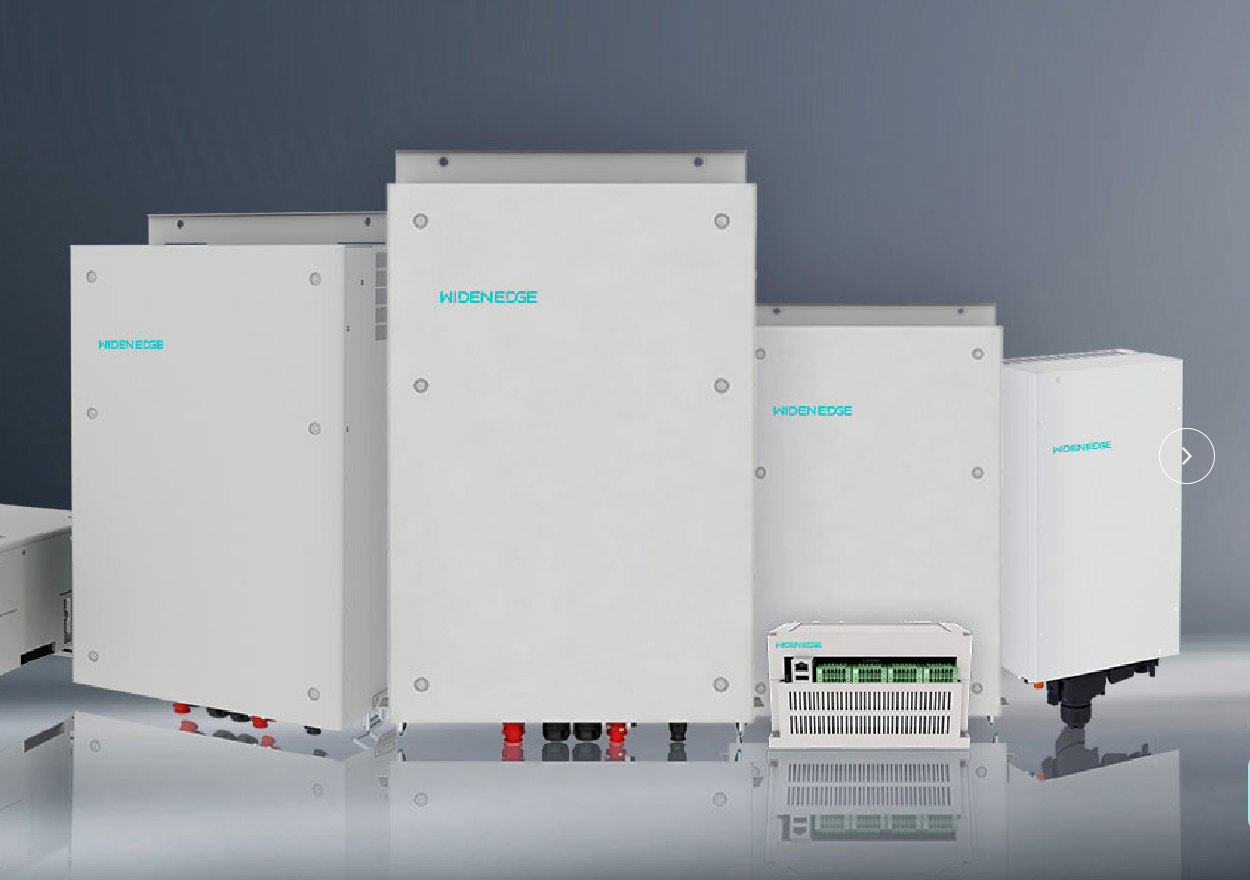
How does a single 125 kW inverter behave when asked to run hard, repeatedly, and reliably at commercial scale? When that inverter sits behind commercial and industrial energy storage racks on a site that leans on battery dispatch every day — think demand charge shaving, peak smoothing, and rapid grid services — its role is both simple and exacting. I frame the comparison against common alternatives and real operating constraints, drawing on field measurements, manufacturer specifications, and operational lessons from deployments tied to California’s CAISO summer peak events. That context clarifies what you should expect from grid‑connected energy storage systems when the inverter is the limiting factor.
What “performance” means for high-utilization commercial sites
Performance is not a single number. Ask five operators and you get five priorities. For commercial sites under heavy use, I focus on these measurable factors:
– Continuous power rating under elevated temperature and reduced AC voltage. – Peak and sustained throughput during repeated cycles (kW and kWh delivered per day). – Round-trip efficiency under real duty cycles (charge/discharge depth and ramp rates). – Thermal behaviour and derating at site ambient conditions. – Control responsiveness: ride-through, islanding, and fast ramp to follow dispatch signals. – Reliability and ease of maintenance to minimize downtime.
Comparative insight: 125 kW vs larger central inverters and string inverters
Why compare? Because size changes trade-offs. A 125 kW inverter sits between a single-string, small-scale inverter and a large central unit. The differences matter during high utilization:
– Scalability: Multiple 125 kW units scale capacity incrementally. A single 250–500 kW central inverter gives fewer points of failure but less flexible redundancy. – Redundancy: Two 125 kW inverters provide graceful degradation — losing one halves capacity but keeps services online. A single larger unit can lead to full-site outage if it trips. – Cost and footprint: Central units may offer lower per-kW hardware cost; smaller inverters typically allow cheaper transportation and simpler rooftop or container installations. – Control and granularity: 125 kW units often integrate more flexibly with site EMS for per-string control and targeted dispatch. – Thermal and derating behavior: Larger inverters can be engineered with heavier cooling, but a bank of smaller inverters spreads heat and often avoids single-point derating when ambient temperature spikes.
Performance in repeated cycling and high-throughput scenarios
High-utilization sites stress the inverter’s continuous rating and thermal design. Expect these patterns:
– Sustained power: Many 125 kW inverters hold their nameplate at rated ambient up to specified limits, but continuous operation near those limits shortens component life. – Efficiency: Real round-trip efficiency depends on the battery chemistry and the inverter’s conversion losses; for lithium-ion systems, inverter contribution to total round-trip losses is commonly modest but not negligible. – Ramp rates and frequency response: A 125 kW inverter can typically meet fast ramp demands for commercial services and can be configured for grid support functions if the firmware and controls are designed for it.
Common pitfalls and mistakes to avoid
Operators often assume the inverter will tolerate any duty. Practical failures usually come from these oversights:
– Ignoring derating tables: Ambient heat, altitude, and AC-side voltage can force derating; design to the worst credible condition, not the lab spec. – Under-specifying cooling and ventilation: Constrained airflow quickens thermal shutdowns. – Overlooking control integration: Poor EMS/inverter communication creates oscillations or missed dispatch. Confirm protocol compatibility and test edge cases. – Assuming one-size redundancy: The math of warranty, maintenance windows, and critical loads might favor N+1 with 125 kW units rather than a single larger inverter. – Neglecting serviceability: Access to replace filters, fans, and power modules reduces mean time to repair.
Practical checklist for selecting a 125 kW inverter
Use this checklist during procurement and design reviews:
– Confirm continuous and peak ratings at site ambient and elevation. – Request measured efficiency curves across expected load profiles. – Verify control feature set: power factor, ride-through, seamless islanding, telemetry. – Ask for manufacturer thermal maps and recommended ventilation plans. – Evaluate failure modes and mean time to repair; insist on spare parts strategy. – Model economic cases: degradation, dispatch cycles, and replacement timeline.
Alternatives and when they fit better
Choose a different architecture when constraints point clearly elsewhere:
– Go larger (central inverter) when site power is dominated by steady long-duration dispatch and footprint/cost per kW outweigh redundancy concerns. – Choose many small string inverters when module-level optimization and panel-level monitoring are priorities (often for distributed generation-dominant sites). – Opt for modular hybrid architectures when you need mixed AC/DC microgrid capabilities and staged capacity growth.
Final synthesis — what to trust and what to test
If you ask whether a 125 kW commercial energy storage inverter is the right choice for a high-utilization site, compare realistic duty cycles, failure consequences, and operational margins rather than rely on nameplate numbers alone. Field experience around CAISO peak operations shows that matching inverter thermal limits, control features, and redundancy strategy to the site’s dispatch profile prevents most surprises. For owners and engineers weighing designs, a clear comparative evaluation that prioritizes measurable behavior and serviceability — the kind of applied guidance found with WidenEdge — reveals whether a 125 kW unit will meet the real-world demands or whether an alternative architecture is the safer, more economical choice.
