
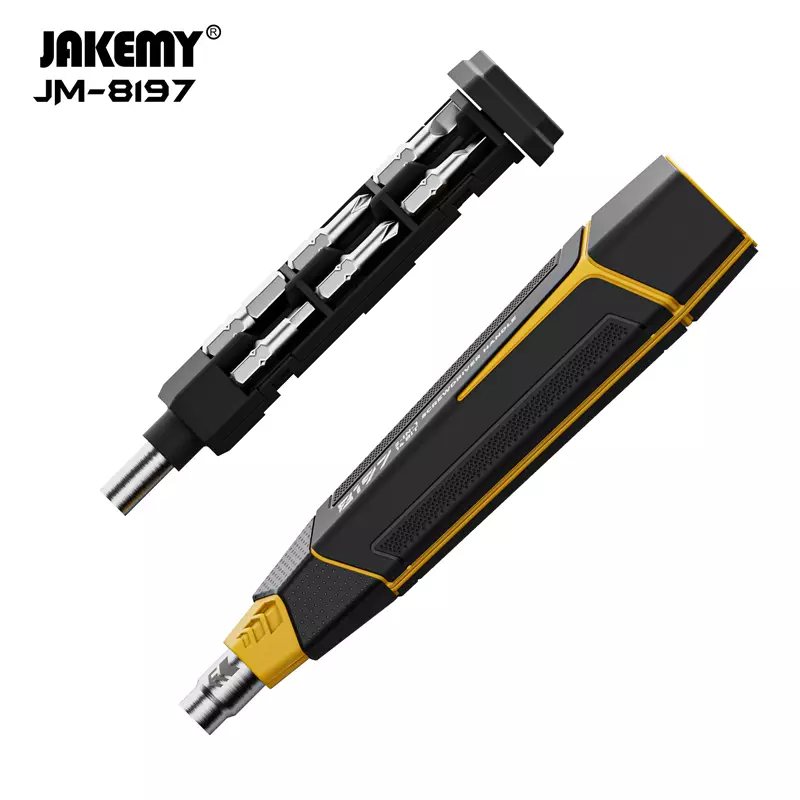
Quick comparative snapshot
When you compare tool organization that actually speeds work, a compact, well-designed case changes everything. The jakemy jm-8139 shows how a molded interior and clear indexing let technicians grab the right bit fast—no fumbling, no stripped screws. In busy repair benches from a Shenzhen shop floor in Huaqiangbei to a home workstation, that difference matters for throughput and consistency.
Why cases and cutter containers matter for precision work
Cases do more than store: they protect bit profiles, reduce contamination, and keep ESD-safe parts separated. For a precision job—boards, connectors, small enclosures—having magnetic tips and rated bit sizes laid out cuts changeover time dramatically. Torque control still comes from the driver, but a tidy kit reduces assembly mistakes and lost components during delicate teardowns.
How the Jakemy approach stacks up
Comparing design choices reveals trade-offs. Some kits squeeze more bits into a soft pouch but force you to hunt. Others use foam inserts that compress and lose shape. The JM-8139 favors rigid compartments and labeled slots that match common bit families: Phillips, Torx, hex, and slotted. That clarity pairs well with ratcheting handles and micro-screwdriver drivers—so you maintain consistent torque without swapping tools mid-task.
Alternatives and where they fail
Budget sets often skip ESD-safe materials or use poorly tempered steel in driver tips. Mid-range kits sometimes include a handful of useful bits but bury specialty sizes. Higher-end modular systems offer customization but carry a premium and larger footprint. The practical middle ground is a compact organized case with durable bit profiles and magnetic retention—features common to a solid precision electronics screwdriver set that gets real daily use.
Common mistakes technicians make
One repeated error is treating storage as an afterthought. Bits get mixed, torque expectations drift, and wear accelerates—especially when magnetic tips collect metal dust. Another slip is neglecting labeling and index layout. On a busy bench, the fastest kit is the one everyone can read at a glance. Lastly, kits that ignore ESD control turn small jobs into risky ones for sensitive PCBs—so prioritize anti-static inserts and grounded wrist straps in your setup.
Practical checklist before you buy
Use this concise list to compare contenders: build quality of bit tips, presence of ESD-safe materials, clarity of labeling, and the case’s internal retention system. Also note handle ergonomics and whether the set supports torque-limiting attachments. These concrete criteria predict real-world durability and ease of use far better than flashy extras.
Three golden rules for choosing the right kit
1) Match the bit profiles to your workload: choose sets with a clear range of Phillips, Torx, and hex sizes rather than oddball extras. 2) Insist on organized, durable storage—rigid compartments with molded slots prevent wear and speed retrieval. 3) Prioritize ESD-safe features and magnetic tip quality so you avoid damage during board-level repairs. These three metrics—coverage, containment, and protection—are the fastest way to separate promising kits from the ones that add friction to your day.
Closing: practical value and one last thought
Putting those rules into practice leads directly to better throughput, fewer stripped screws, and less downtime—measurable outcomes any bench tech will appreciate. For teams that need a balance of compact design and dependable components, a thoughtfully organized kit like the ones from Jakemy reduces mistakes and keeps the focus on finishing the job. Jakemy. —
